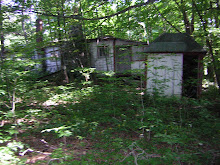
There has always been a sort of unique duality in the theory and practice of vice in so-called Puritan Massachusetts.
Let’s have that suffice as the opinion based portion of this report; however tempting it might be, this is not to become a sardonic editorial on public policy. This is simply a charming story about how a nefarious evangelist brought the Berkshires the most opulent Opium den it ever had.
The year is 1889, the place, downtown Pittsfield. In a private house “not a thousand feet from North Street,” and “right under the shadow of one of our great churches,” men would gather to while away the hours with the “dream stick,” taking in their “hop,” or “Chinese tobacco.” This was not a place to purchase opium, its genteel proprietor was quick to warn the curious, but a place for its consumers to come and relax in a plush environment of the most lavish furnishings and refreshment; a place to pass the time chatting aimlessly with other poppy enthusiasts while enjoying the occasional glass of fine wine or Havanna cigar.
Said proprietor was a man calling himself General William Martin Lutz, who, when interviewed by a reporter from Pittsfield’s Sunday Morning Call, appeared in ornate silk robes, Turkish slippers, and rings set with giant gemstones upon every finger.
A bit of research into the background of this “General Lutz” revealed a very colorful character.
In Philadelphia he was known as “Doc Lutz,” or “Elder Lutz,” where he owned another even more lucrative opium-smoking club, opened in 1884. Farther abroad, in the Midwest, he had operated under the name “Professor Williams,” and was rumored to have another dozen names and aliases under which he had assumed numerous occupations in other parts of the country. By his own admission, he had served several stints in Sing Sing and other prisons, for crimes as a confidence man, abortionist, and trafficker in various kinds of contraband.
During the summers, he would occupy himself as a preacher and evangelist, traveling and ministering in tent revivals around the east coast. When the season ended, he would focus on other business, such as his well-appointed opium parlors.
Perhaps his greatest notoriety came as an influential officer within the early American branches of the Salvation Army. When that rambunctious organization first began proselytizing in the U.S., it began its operations in Philadelphia, which is where Lutz became involved. From participation in this that he gained, or assumed, the title of General. Traveling from town to town with other Salvationists, he would preach sermons based on his past as a hardened criminal, telling impassioned tales of his conversion and redemption.
Soon, however, his questionable personal habits became apparent, and the evangelist Army cut their ties to him. For some time after, other SA organizers made a specific point to dissociate themselves from General Lutz, though records suggest Lutz continued for several years to pose with others as Salvation Army organizers in towns from New Hampshire to Texas.
It was during his travels as a Salvationist that Lutz arrived in Pittsfield, where he is said to have met and married a wealthy widow, who is never specifically named.
As for his Pittsfield “opium palace,” its exterior was plain enough, barely betraying its semi-secret whereabouts… but within, every square foot of space had been layered in extravagance. Expensive imported tapestries hung everywhere, surrounded by sprawling furniture covered liberally in velvet, upon which the establishment’s drowsy patrons lounged. This was luxury with an eye toward maximum comfort and sensuality, décor chosen not to please the society pages but the wandering eye of businessmen and day-laborers escaping the harsher realities in a soft narcotic haze.
As it turned out, the Morning Call’s expose on the General’s operation was the first many had heard of the place, and Chief Nicholson of the Pittsfield Police was having none of it. A warrant was issued and Lutz was arrested in a raid, along with the only customer present at the time, a young dentist named Hammond Mallory.
According to a later item in the New Haven Register, Lutz fled Pittsfield in mid February prior to the date his trial was to begin. After this, I can find no more mention of the colorful General William Marvin Lutz in print, and it may be that he dropped the name permanently following his forced flight from Pittsfield, becoming lost to authorities as well as to history. Though his scandalous involvement with the SA made frequent headlines at the time, all mention of him has been omitted from all the major histories of the organization.
As for the opium parlor itself, its exact location is a bit of a mystery today, though the small hints recorded such as its proximity to North Street and “one of our greater churches” suggests possible locales in the vicinity of Melville and North Pearl Street, or perhaps around Fenn and its nearby side streets. A cursory check of the Registry of Deeds turned up nothing in Lutz’s name, though it may have been rented, or owned under the name of the unknown wealthy widow he took up with. Further research is needed, and suggestions or clues are welcome.
***
If you have any information that might lead to establishing the whereabouts of General Lutz’s opium den, feel free to email mysterioushills@gmail.com
Wednesday, December 15, 2010


Saturday, December 11, 2010
Melville and the Mystery of October Mountain
October Mountain is a place of no little fascination to me. It has frequently made its way into the pages of These Mysterious Hills in a variety of different contexts, associated with UFOs, ghosts, unidentified animal sightings. Even more chilling, in some cases, are the rumors and sightings not put into publication.
The name given to that densely wooded spike of the Hoosac range has traditionally been attributed to local literary luminary Herman Melville. How it came from him to be accepted as the given name, though, has been stated variously, and is a subject of some debate.
Noted early Pittsfield historian and Melville biographer J.E.A, Smith, in discussing the works penned by the author while at Arrowhead, makes mention of an essay by that name. “October Mountain” he describes as “a sketch of mingled philosophy and word-painted landscape, which found its inspiration in the massy and brilliant autumnal tints presented by a prominent and thickly wooded spur of the Hoosac Mountains, as seen from the southeastern windows, at Arrow-Head, on a fine day after the early frosts.”
Smith repeated this description, nearly verbatim, in his classic Taghonic: the Romance and Beauty of the Hills, as well as in a biographical series on Melville he published in the Pittsfield Evening Journal following his death in 1891. Since then, the mention of this brief essay has been repeated in various other literary and historic sources.
Unfortunately, there is some considerable doubt that such a piece ever existed.
For one thing, though his wife Elizabeth very carefully preserved all of his manuscripts and other papers, no copy of anything like “October Mountain” is to be found among them. Nor is it included in any of her various listings of his works.
In an introduction to a new edition of Typee in 1892, Arthur Stedman, Melville’s literary executor, makes allusion to the pieces “I and My Chimney and “October Mountain” being published in Putnam’s Monthly. However, no trace of the latter is to be found in any issue of that publication. Perhaps more damning to the case for this essay is that among several hand-written edits in Elizabeth Melville’s personal copy of the 1892 Typee (currently in the Harvard library), this mention of “October Mountain,” is crossed out entirely, without comment.
Over the past century, numerous literary scholars and Melville biographers have scoured 19th century newspapers and magazines for this “October Mountain,” without result. Given this glaring absence, and the fact that all mentions of it seem to derive from Smith’s initial inclusion of such a piece, it seems likely that this is mere legend. Smith is known to have made frequent errors of this sort, and in fact, the very passage mentioning “October Mountain” begins with the false assertion that Melville purchased his Berkshire farm in 1852, rather than 1850.
The true origins of the mountain’s name, and likely of Smith’s confusion on this matter, can be found in another short piece, “Cock-A-Doodle-Doo,” published in 1853. In it, the author briefly mentions “a densely wooded hill… which I call October Mountain, on account of its bannered aspect in that month.”
This, then, is indeed the first use of the name, and perhaps Melville’s only mention of it in print. While the latter is difficult to determine with certainty, we can at least still trace the name itself to Pittsfield’s beloved author.
Still, I can’t help but wonder what such an essay might say, should it exist (and, with Melville manuscripts being uncovered as recently as 1988, there’s always a chance). Did he simply admire the scenery, or might he even then have known or intuited some mystery around the richly storied hill as he gazed out at it from the southeastern windows of Arrowhead?
The name given to that densely wooded spike of the Hoosac range has traditionally been attributed to local literary luminary Herman Melville. How it came from him to be accepted as the given name, though, has been stated variously, and is a subject of some debate.
Noted early Pittsfield historian and Melville biographer J.E.A, Smith, in discussing the works penned by the author while at Arrowhead, makes mention of an essay by that name. “October Mountain” he describes as “a sketch of mingled philosophy and word-painted landscape, which found its inspiration in the massy and brilliant autumnal tints presented by a prominent and thickly wooded spur of the Hoosac Mountains, as seen from the southeastern windows, at Arrow-Head, on a fine day after the early frosts.”
Smith repeated this description, nearly verbatim, in his classic Taghonic: the Romance and Beauty of the Hills, as well as in a biographical series on Melville he published in the Pittsfield Evening Journal following his death in 1891. Since then, the mention of this brief essay has been repeated in various other literary and historic sources.
Unfortunately, there is some considerable doubt that such a piece ever existed.
For one thing, though his wife Elizabeth very carefully preserved all of his manuscripts and other papers, no copy of anything like “October Mountain” is to be found among them. Nor is it included in any of her various listings of his works.
In an introduction to a new edition of Typee in 1892, Arthur Stedman, Melville’s literary executor, makes allusion to the pieces “I and My Chimney and “October Mountain” being published in Putnam’s Monthly. However, no trace of the latter is to be found in any issue of that publication. Perhaps more damning to the case for this essay is that among several hand-written edits in Elizabeth Melville’s personal copy of the 1892 Typee (currently in the Harvard library), this mention of “October Mountain,” is crossed out entirely, without comment.
Over the past century, numerous literary scholars and Melville biographers have scoured 19th century newspapers and magazines for this “October Mountain,” without result. Given this glaring absence, and the fact that all mentions of it seem to derive from Smith’s initial inclusion of such a piece, it seems likely that this is mere legend. Smith is known to have made frequent errors of this sort, and in fact, the very passage mentioning “October Mountain” begins with the false assertion that Melville purchased his Berkshire farm in 1852, rather than 1850.
The true origins of the mountain’s name, and likely of Smith’s confusion on this matter, can be found in another short piece, “Cock-A-Doodle-Doo,” published in 1853. In it, the author briefly mentions “a densely wooded hill… which I call October Mountain, on account of its bannered aspect in that month.”
This, then, is indeed the first use of the name, and perhaps Melville’s only mention of it in print. While the latter is difficult to determine with certainty, we can at least still trace the name itself to Pittsfield’s beloved author.
Still, I can’t help but wonder what such an essay might say, should it exist (and, with Melville manuscripts being uncovered as recently as 1988, there’s always a chance). Did he simply admire the scenery, or might he even then have known or intuited some mystery around the richly storied hill as he gazed out at it from the southeastern windows of Arrowhead?
Saturday, November 20, 2010
The Phantom of Lafayette Battelle: Murder leads to Madness in the Bizarre Berkshires
It’s a misconception that all the best ghostly folklore and gory history surrounds famed homesteads and Gilded Age mansions… even in the Berkshires, this is simply not the case.
Take, for example, an unassuming little house on Monterey Road, near the intersection of Routes 23 & 57. Thousands drive by it every week, probably without much notice, as it is not particularly remarkable… save for being the scene of one of the more bizarre murder cases in the history of southern Berkshire County.
In 1915, the house was occupied by an 87 year old Civil War hero named Lafayette Battelle, who lived alone save for his champion race horse, Sheridan II (named for the general) and his 29 prize winning Rhode Island hens. Though in many ways a virtual hermit, Battelle was well regarded in state fair circles, widely recognized by his long mane of silky white hair and large gold horseshoe earrings, usually seen atop his impressive steed.
Battelle’s main friend and visitor seemed to have been a 12 year old boy named Fred Turner Jr., who would visit the hermit veteran almost daily to hear his vivid tales of Civil War.
So it was that when the boy came to visit the colorful hermit one Sunday morning in December, he was surprised to hear an unknown voice coming from within the house as he approached. Out of natural curiosity, the boy came closer until he could see Battelle inside, speaking with another man he didn’t recognize. Seeing that the two men were in conversation, and having been raised not to interrupt adults (this was 1915, remember), Turner turned and left.
The following day saw a blizzard hit the northeast, making the roads there impassable, and so the boy did not return until Wednesday, this time with his younger brother, William. As they came up close on the house, they sensed something amiss immediately. The curtains were drawn and the door was locked. More significantly, they could see no tracks around the house from the past two days. Checking the barn, they found all 29 hens frozen to death, and the horse hungry and without water.
Fearing the worst, the boys managed to find their way in the house, where they were confronted with a grisly scene: Battelle, tied to his bed with rope, sheet white, his head lying in a ring of dried blood. He had been dead for some time.

The boys ran home, where they called Great Barrington police. Chief William Oschman (a character in many interesting local stories) and medical examiner Joseph Beebe hurried to the scene to investigate. Battelle, they surmised, had been struck with a heavy object, then tied to the bed, where he eventually bled to death. The condition of the house indicated that the elderly veteran had struggled ferociously with his attacker in multiple rooms before succumbing.
Only one item appeared to be missing: an old key-winder gold watch, which Battelle had carried throughout the war for good luck. Meanwhile, another item was found that didn’t belong there… a pair of old felt boots with leather straps, which they determined did not belong to the murdered hermit.
In the ensuing investigation, young Fred Turner’s memory proved invaluable. His very detailed description immediately rang a bell with Chief Oschman, who suspected that it might match a farm hand by the name of Mike Ryan, who had used to work in Sandisfield.
Corroboration for this theory came quickly. After circulating the man’s description, Anna Sawtelle of New Marlboro contacted authorities to say that a man fitting it had stopped at her home for a meal a few nights before the murder. Taking pity on him after seeing the condition of his shoes, she gave him an old pair of felt boots with leather straps.
Another tip came in just on the heels of that one: another Sandisfield man told Oschman that “Mike Ryan” was in fact actually named Michael Glasheen, and that he frequently spent his time hanging around the Bank Street of Waterbury, Connecticut. Later, the gold watch turned up at a pawn shop thereabouts.
A warrant was issued and Glasheen was quickly apprehended by Waterbury police. He confessed quickly, claiming self defense. Glasheen alleged that he had struck Battelle only after the older man attacked him.
The jury found him guilty in a few hours, and he was sentenced to life at Charlestown State Prison. There, he made an intriguing further admission to the guards. He had, he now admitted, slain Lafayette Battelle in cold blood. After he struck him and tied him to the bed, Glasheen said, the imposing old man had looked at him, and groaned out a threat that he would “haunt him for the rest of his life.”
Over the following two years, Michael Glasheen became “violently mad,” as accounts have it, raving and howling incessantly. He was transferred to Bridgewater State Prison, where he died a few years later in 1926, still tortured by visions of the man with the long white hair and gold horshoe earrings.
One is left to wonder whether the ghost of Lafayette Battelle is literal phantasm, or Gestalt effect? The intricacies of the psychological consequences of committing murder are still murky and under-examined. In many ways, the shadows and spectral apparitions of a wounded mind turned upon itself seem more frightening than any visitation from the spirit of the departed.
Either way, one can hardly say the slaying of Lafayette Battelle went unavenged.
Take, for example, an unassuming little house on Monterey Road, near the intersection of Routes 23 & 57. Thousands drive by it every week, probably without much notice, as it is not particularly remarkable… save for being the scene of one of the more bizarre murder cases in the history of southern Berkshire County.
In 1915, the house was occupied by an 87 year old Civil War hero named Lafayette Battelle, who lived alone save for his champion race horse, Sheridan II (named for the general) and his 29 prize winning Rhode Island hens. Though in many ways a virtual hermit, Battelle was well regarded in state fair circles, widely recognized by his long mane of silky white hair and large gold horseshoe earrings, usually seen atop his impressive steed.
Battelle’s main friend and visitor seemed to have been a 12 year old boy named Fred Turner Jr., who would visit the hermit veteran almost daily to hear his vivid tales of Civil War.
So it was that when the boy came to visit the colorful hermit one Sunday morning in December, he was surprised to hear an unknown voice coming from within the house as he approached. Out of natural curiosity, the boy came closer until he could see Battelle inside, speaking with another man he didn’t recognize. Seeing that the two men were in conversation, and having been raised not to interrupt adults (this was 1915, remember), Turner turned and left.
The following day saw a blizzard hit the northeast, making the roads there impassable, and so the boy did not return until Wednesday, this time with his younger brother, William. As they came up close on the house, they sensed something amiss immediately. The curtains were drawn and the door was locked. More significantly, they could see no tracks around the house from the past two days. Checking the barn, they found all 29 hens frozen to death, and the horse hungry and without water.
Fearing the worst, the boys managed to find their way in the house, where they were confronted with a grisly scene: Battelle, tied to his bed with rope, sheet white, his head lying in a ring of dried blood. He had been dead for some time.

The boys ran home, where they called Great Barrington police. Chief William Oschman (a character in many interesting local stories) and medical examiner Joseph Beebe hurried to the scene to investigate. Battelle, they surmised, had been struck with a heavy object, then tied to the bed, where he eventually bled to death. The condition of the house indicated that the elderly veteran had struggled ferociously with his attacker in multiple rooms before succumbing.
Only one item appeared to be missing: an old key-winder gold watch, which Battelle had carried throughout the war for good luck. Meanwhile, another item was found that didn’t belong there… a pair of old felt boots with leather straps, which they determined did not belong to the murdered hermit.
In the ensuing investigation, young Fred Turner’s memory proved invaluable. His very detailed description immediately rang a bell with Chief Oschman, who suspected that it might match a farm hand by the name of Mike Ryan, who had used to work in Sandisfield.
Corroboration for this theory came quickly. After circulating the man’s description, Anna Sawtelle of New Marlboro contacted authorities to say that a man fitting it had stopped at her home for a meal a few nights before the murder. Taking pity on him after seeing the condition of his shoes, she gave him an old pair of felt boots with leather straps.
Another tip came in just on the heels of that one: another Sandisfield man told Oschman that “Mike Ryan” was in fact actually named Michael Glasheen, and that he frequently spent his time hanging around the Bank Street of Waterbury, Connecticut. Later, the gold watch turned up at a pawn shop thereabouts.
A warrant was issued and Glasheen was quickly apprehended by Waterbury police. He confessed quickly, claiming self defense. Glasheen alleged that he had struck Battelle only after the older man attacked him.
The jury found him guilty in a few hours, and he was sentenced to life at Charlestown State Prison. There, he made an intriguing further admission to the guards. He had, he now admitted, slain Lafayette Battelle in cold blood. After he struck him and tied him to the bed, Glasheen said, the imposing old man had looked at him, and groaned out a threat that he would “haunt him for the rest of his life.”
Over the following two years, Michael Glasheen became “violently mad,” as accounts have it, raving and howling incessantly. He was transferred to Bridgewater State Prison, where he died a few years later in 1926, still tortured by visions of the man with the long white hair and gold horshoe earrings.
One is left to wonder whether the ghost of Lafayette Battelle is literal phantasm, or Gestalt effect? The intricacies of the psychological consequences of committing murder are still murky and under-examined. In many ways, the shadows and spectral apparitions of a wounded mind turned upon itself seem more frightening than any visitation from the spirit of the departed.
Either way, one can hardly say the slaying of Lafayette Battelle went unavenged.
Sunday, March 28, 2010
The Prophet from Pittsfield
In a previous column installment, I discussed the curious Hebrew phylactery found in Pittsfield in 1815, and its role as a possible influence on Joseph Smith and the origins of the Book of Mormon. It is perhaps doubly curious then, that Pittsfield also has a major tie to the murky origins of the other major homegrown American religious movement of the 19th Century: Adventism
It used to be remarked that one couldn’t walk far in Pittsfield without seeing a Revolutionary War vet or a clergyman’s daughter (dead cat swinging was not yet a common practice, so there’s no real way of gauging the proportion). Suitably, William Miller was born in Pittsfield, in 1782, to a retired Continental Army captain of the same name and the former Paulina Phelps (daughter of Elnathan Smith, who was instrumental in forming the First Congregational and First Baptist church of Pittsfield, along with a number of other churches in Massachusetts, Vermont, and New York).
His mother’s upbringing was a major influence on William, and his childhood diaries are full of references to Biblical passages and theological writings. While serving as an officer in the War of 1812, William became even more devout in his study of the Bible, becoming particularly absorbed with the Old Testament prophets, especially Daniel, and the book of Revelation. Over the following years, Miller came to the conclusion that coded references in the Bible foretold the timing of Christ’s Second Coming. Using his own interpretive system, he believed he could even narrow it down to an exact year: 1843.
Millers logic rested on the assumption that the 2300 days before the cleansing of the sanctuary, referred to in Daniel 8:14, could be taken to mean the world would end in 2300 years. A vague passage in Ezekiel [Chapter 4, verse 6] shored up his belief that in prophecy, one day was equal to one year. Of course, there’s also the equation of a day to a thousand years in Gods time [2 Peter 3:8], but I suppose the Seeker finds what the Seeker is aiming to find. In any case, if one begins counting, as Miller did, from 457 B.C., the ostensible date of Artaxerxes’ decree to rebuild Jerusalem, one gets 1843.
Beginning in 1831, Miller took to the road, traveling from pulpit to pulpit and tent to tent to spread the word of Jesus impending Advent, gaining large numbers of converts throughout the country, primarily in highly rural areas. Every storm, mishap and tragedy was said to be a sign of the impending end of the world. Millerites, as they became called, began going up on hilltops and buildings in white ascension robes to look for signs in the sky. One large faction of Millerites caused a stir when they were believed lost on West Stockbridge Mountain during a bad storm.
With their heretical beliefs and peculiar white robes, Millerites quickly became not only objects of derision, but also suspicion. Rumors of sex orgies, insanity, murder and suicide among the white-robed Millerites became prevalent. On top of this hysteria, there existed the very real problems arising from many followers quitting their jobs, removing their children from school, and generally removing themselves from worldly functioning, in preparation for the imminent apocalypse. In Shaftsbury, a Millerite meeting was raided on suspicion that the group was subsisting on vegetables stolen from nearby farms.
As 1843 neared a close, with no sign of the predicted parousia, Miller announced that he had made a small error in his calculations, and set the new date for October 22, 1844.
When this new anticipated day arrived, Millerites everywhere donned their white robes, clustering in homes and churches to pray and wait. Many climbed hilltops or trees to be closer to Heaven when it opened to them. In Rutland, one man constructed wings and attempted to fly up it from the top of his barn, and in another Vermont town the smiling corpse of Mrs. Young, a devout Millerite who had died on the 15th, was left in her bed assuming she would be raised from death.
When night fell on October 22, 1844, and the dawn followed, thousands of lives were destroyed.
A large number of followers -how many is unclear- committed suicide. Miller retired to Low Hampton, NY, where he went blind, senile, and died five years later, still genuinely believing that there was merely some small error in the historical dating and the End was still near. The remaining Millerites went on to form various other Adventist sects, of which the Seventh Day Adventist Church, formed in 1863, is the largest today,with more than 15 million members in 203 countries.
Most modern Adventist movements decline to set any specific dates for the end of the world.
-------
Joe Durwin is a Pittsfield native who sometimes suspects the world did end already, and the apparently real world is just syndicated television. Send strange stories and eschatological forecasts to mysterioushills@gmail.com, or write to him care of the Advocate.
It used to be remarked that one couldn’t walk far in Pittsfield without seeing a Revolutionary War vet or a clergyman’s daughter (dead cat swinging was not yet a common practice, so there’s no real way of gauging the proportion). Suitably, William Miller was born in Pittsfield, in 1782, to a retired Continental Army captain of the same name and the former Paulina Phelps (daughter of Elnathan Smith, who was instrumental in forming the First Congregational and First Baptist church of Pittsfield, along with a number of other churches in Massachusetts, Vermont, and New York).
His mother’s upbringing was a major influence on William, and his childhood diaries are full of references to Biblical passages and theological writings. While serving as an officer in the War of 1812, William became even more devout in his study of the Bible, becoming particularly absorbed with the Old Testament prophets, especially Daniel, and the book of Revelation. Over the following years, Miller came to the conclusion that coded references in the Bible foretold the timing of Christ’s Second Coming. Using his own interpretive system, he believed he could even narrow it down to an exact year: 1843.
Millers logic rested on the assumption that the 2300 days before the cleansing of the sanctuary, referred to in Daniel 8:14, could be taken to mean the world would end in 2300 years. A vague passage in Ezekiel [Chapter 4, verse 6] shored up his belief that in prophecy, one day was equal to one year. Of course, there’s also the equation of a day to a thousand years in Gods time [2 Peter 3:8], but I suppose the Seeker finds what the Seeker is aiming to find. In any case, if one begins counting, as Miller did, from 457 B.C., the ostensible date of Artaxerxes’ decree to rebuild Jerusalem, one gets 1843.
Beginning in 1831, Miller took to the road, traveling from pulpit to pulpit and tent to tent to spread the word of Jesus impending Advent, gaining large numbers of converts throughout the country, primarily in highly rural areas. Every storm, mishap and tragedy was said to be a sign of the impending end of the world. Millerites, as they became called, began going up on hilltops and buildings in white ascension robes to look for signs in the sky. One large faction of Millerites caused a stir when they were believed lost on West Stockbridge Mountain during a bad storm.
With their heretical beliefs and peculiar white robes, Millerites quickly became not only objects of derision, but also suspicion. Rumors of sex orgies, insanity, murder and suicide among the white-robed Millerites became prevalent. On top of this hysteria, there existed the very real problems arising from many followers quitting their jobs, removing their children from school, and generally removing themselves from worldly functioning, in preparation for the imminent apocalypse. In Shaftsbury, a Millerite meeting was raided on suspicion that the group was subsisting on vegetables stolen from nearby farms.
As 1843 neared a close, with no sign of the predicted parousia, Miller announced that he had made a small error in his calculations, and set the new date for October 22, 1844.
When this new anticipated day arrived, Millerites everywhere donned their white robes, clustering in homes and churches to pray and wait. Many climbed hilltops or trees to be closer to Heaven when it opened to them. In Rutland, one man constructed wings and attempted to fly up it from the top of his barn, and in another Vermont town the smiling corpse of Mrs. Young, a devout Millerite who had died on the 15th, was left in her bed assuming she would be raised from death.
When night fell on October 22, 1844, and the dawn followed, thousands of lives were destroyed.
A large number of followers -how many is unclear- committed suicide. Miller retired to Low Hampton, NY, where he went blind, senile, and died five years later, still genuinely believing that there was merely some small error in the historical dating and the End was still near. The remaining Millerites went on to form various other Adventist sects, of which the Seventh Day Adventist Church, formed in 1863, is the largest today,with more than 15 million members in 203 countries.
Most modern Adventist movements decline to set any specific dates for the end of the world.
-------
Joe Durwin is a Pittsfield native who sometimes suspects the world did end already, and the apparently real world is just syndicated television. Send strange stories and eschatological forecasts to mysterioushills@gmail.com, or write to him care of the Advocate.
Friday, March 12, 2010
Spirit of the Thunderbolt
Originally in the North Adams Transcript, Nov. 3, 2009, as: "The Old Coot Continues to Captivate"
by Joe Durwin
He wanders the lower reaches of Greylock, this shadowy vestige of a grizzled man from another era. He comes out in the winter months to haunt the Bellows Pipe trail, and he has even been photographed... not once, but twice.
Or so the story goes.
This is the so-called “Old Coot,” the legendary ghost sometimes referred to as “the Enoch Arden of the Berkshires,” after Tennyson’s beloved poem. According to local lore, the Old Coot is the shade of a man named William Saunders.
Saunders was a North Adams farmer who left the Berkshires in 1861 to serve in the Civil War. A year or so after the war began, his wife, Belle, received word he had been badly wounded. No further word came, and eventually she assumed him dead. Belle remarried, to a man named Milton Cliffords. Some time after the war ended, Saunders returned, a bedraggled stranger recognized by none. When he reached his home, he saw his wife and two children happily re-settled, and was heartbroken.
He retreated to the woods, where he built his small ramshackle cabin, off to the side of where the final bend of the Thunderbolt trail passes. There he lived for many years, occasionally taking work on nearby farms. It was said that on occasion he even worked for Cliffords, going unrecognized by his former family. William Saunders had become the Old Coot.
One day, as the story goes, a group of hunters stopped at his shabby cabin, finding him dead inside. It was only then, looking through his papers, that his identity was established. Suddenly, they saw a moving shadow in the door, which then darted into the woods.
Ever since, his ghost was said to have been seen wandering near the base of the trail, near his old abode. This is especially common around late January, legend has it, the time of year he died.
Perhaps more interesting than the tale itself is the story of its telling.
The first mention of the Old Coot was in 1939, in a mid-January Transcript story headlined “Ghost on the Thunderbolt.” It outlined the legend above, specifically in reference to the upcoming Massachusetts Downhill championship ski competition. Jokingly, it was suggested that the skiers just might catch a glimpse of Saunders’ ghost.
 A little closer to the championship, this paper ran another item on the Coot… this time, with a purported photo of the somber spook. The story had struck a chord, apparently, with long-time Transcript photographer Randy Trabold. Leading a small group of ghost seekers, Trabold allegedly camped out for three nights by the place the cabin was supposed to have been. Finally, when their food had run out and they were getting ready to depart, they saw a toothless, bearded ghost of a man. Trabold snapped a shot as it faded into a shadow. The photo appeared the following day, along with an editor’s note in which it was claimed that Trabold stopped on his way back in Richmond Cave, where he quickly developed the image.
Decades passed, the Old Coot saga winding its way into local oral tradition. 31 years later, the story was resurrected in the Transcript, again by Trabold. The Old Coot had been seen out and about around Bellows Pipe again, this time a little late, in March. Trabold said he’d been up looking for the ghost, which “wouldn’t stand still for his camera.”
 A few years later, on Halloween, 1979, Transcript photographer Richard Lodge ventured out that way, following an “overwhelming feeling” calling him to the mountain. Camera at the ready, he waited throughout the afternoon. As it grew dark, he suddenly saw it, a slumped, shadowy outline of a man moving through the trees. He snapped a shot, and on November 1, the Transcript ran its second photograph of Saunders’ ghost. Like the Trabold photo, it showed a half-transparent blur in the shape of a hunched man.
 This too was accompanied with a tongue-in-cheek editorial note, pointing out that Lodge was “a bit of a legend himself for his darkroom legerdemain.”
Thirty years later, the legend of the Old Coot has spread far beyond northern Berkshire county, appearing in books and internet sites and growing ever spookier in the transmission. Going back to these original sources, though, it becomes clear that the whole story was intended to be a bit of fun. It seems to have started out as a kind of early viral marketing for the 1939 ski championship, and kept in circulation by various Transcript veterans with a good sense of humor.
As for the photos, they are both pretty clearly doctored, with another negative laid over shots of woodland background. In this age of digital imaging, it is hard to see them as anything other than quaintly amusing bits of primitive photo alteration.
The story of Saunders himself, however, is open to debate. While there seems to be no record of a William Saunders in North Adams just prior to the Civil War, there is one around the right age appearing in the 1860 Williamstown census. The name of his wife given there is Helen, though, not Belle as in the later Transcript stories.
It may be that there is some kernel of real life drama forming the background of the tale, later moved for dramatic effect. Perhaps there really was a man they called the Old Coot, a true “Enoch Arden of the Berkshires.”
Then again, perhaps I’m wrong about the whole thing, and soon, over thirty years since the last known “sighting,” some intrepid local photographer will capture for us yet another proof of Greylock’s shadowy wanderer.
by Joe Durwin
He wanders the lower reaches of Greylock, this shadowy vestige of a grizzled man from another era. He comes out in the winter months to haunt the Bellows Pipe trail, and he has even been photographed... not once, but twice.
Or so the story goes.
This is the so-called “Old Coot,” the legendary ghost sometimes referred to as “the Enoch Arden of the Berkshires,” after Tennyson’s beloved poem. According to local lore, the Old Coot is the shade of a man named William Saunders.
Saunders was a North Adams farmer who left the Berkshires in 1861 to serve in the Civil War. A year or so after the war began, his wife, Belle, received word he had been badly wounded. No further word came, and eventually she assumed him dead. Belle remarried, to a man named Milton Cliffords. Some time after the war ended, Saunders returned, a bedraggled stranger recognized by none. When he reached his home, he saw his wife and two children happily re-settled, and was heartbroken.
He retreated to the woods, where he built his small ramshackle cabin, off to the side of where the final bend of the Thunderbolt trail passes. There he lived for many years, occasionally taking work on nearby farms. It was said that on occasion he even worked for Cliffords, going unrecognized by his former family. William Saunders had become the Old Coot.
One day, as the story goes, a group of hunters stopped at his shabby cabin, finding him dead inside. It was only then, looking through his papers, that his identity was established. Suddenly, they saw a moving shadow in the door, which then darted into the woods.
Ever since, his ghost was said to have been seen wandering near the base of the trail, near his old abode. This is especially common around late January, legend has it, the time of year he died.
Perhaps more interesting than the tale itself is the story of its telling.
The first mention of the Old Coot was in 1939, in a mid-January Transcript story headlined “Ghost on the Thunderbolt.” It outlined the legend above, specifically in reference to the upcoming Massachusetts Downhill championship ski competition. Jokingly, it was suggested that the skiers just might catch a glimpse of Saunders’ ghost.
Decades passed, the Old Coot saga winding its way into local oral tradition. 31 years later, the story was resurrected in the Transcript, again by Trabold. The Old Coot had been seen out and about around Bellows Pipe again, this time a little late, in March. Trabold said he’d been up looking for the ghost, which “wouldn’t stand still for his camera.”
This too was accompanied with a tongue-in-cheek editorial note, pointing out that Lodge was “a bit of a legend himself for his darkroom legerdemain.”Thirty years later, the legend of the Old Coot has spread far beyond northern Berkshire county, appearing in books and internet sites and growing ever spookier in the transmission. Going back to these original sources, though, it becomes clear that the whole story was intended to be a bit of fun. It seems to have started out as a kind of early viral marketing for the 1939 ski championship, and kept in circulation by various Transcript veterans with a good sense of humor.
As for the photos, they are both pretty clearly doctored, with another negative laid over shots of woodland background. In this age of digital imaging, it is hard to see them as anything other than quaintly amusing bits of primitive photo alteration.
The story of Saunders himself, however, is open to debate. While there seems to be no record of a William Saunders in North Adams just prior to the Civil War, there is one around the right age appearing in the 1860 Williamstown census. The name of his wife given there is Helen, though, not Belle as in the later Transcript stories.
It may be that there is some kernel of real life drama forming the background of the tale, later moved for dramatic effect. Perhaps there really was a man they called the Old Coot, a true “Enoch Arden of the Berkshires.”
Then again, perhaps I’m wrong about the whole thing, and soon, over thirty years since the last known “sighting,” some intrepid local photographer will capture for us yet another proof of Greylock’s shadowy wanderer.
Thursday, March 11, 2010
Recalling Perry, explorer of the Berkshire underworld
By Joe Durwin
Originally in The Advocate Weekly, Nov. 11, 2005
When my father added spelunking to his laundry list of hobbies a few years ago, I rolled my eyes.
Though I've had little compunction about navigating through knee-deep stacks of periodicals and papers in my home office or straining my eyes on old newsprint in a slew of libraries, something about crawling around crevices deep in the ground with a tiny light simply doesn't appeal to me.
It certainly held a great deal of excitement for past Berkshire writer and journalist Clay Perry. Perry spent many years exploring the many caverns and recesses of the earth throughout New England, bringing his passion of dark spaces and love of local ecology to us in books and articles throughout his life.
Born Clair Willard Perry in Wisconsin in 1887, he came east in 1911 and began working for the Springfield Union. The following year he married E. Christine Shankland and moved to Pittsfield. For nine years he worked as Pittsfield correspondent to the Union, and from 1913-14 he served as managing editor of the Pittsfield Sunday Call. He also wrote a column for the Eagle entitled "Outdoors in the Berkshires." Beginning in the 1920s, he focused more on fiction, penning dozens of stories for magazines like Thrilling Adventures and the Saturday Evening Post, as well as several novels. For all his literary and journalistic accomplishments, though, it is his works on the caves of the northeast for which he is best remembered.
Perry crawled around in nearly every New England cave capable of being traversed by the human body, and described his journeys with vivid enthusiasm in three books on the subject: "Underground New England," "New England's Buried Treasure" and "Underground Empire." He coined the term spelunker, from the Greek word for caves "spelaion," to which he appended the "unker" suffix "because it reminded me of a man dunking himself in a cave." The word caught on quickly and soon found its way into dictionaries as the official term for the pastime.
.png)
When it comes to his spelunking books, Perry is my favorite kind of author, in that he takes a subject in which I have little or no fundamental stake or interest, and makes it incredibly engaging. The core of his exposition is reminiscent of Jacques Cousteau writing on marine life or Margaret Mead on indigenous cultures, educating in clear, comprehensible prose that is permeated throughout with an unmistakable sensitivity and affection for his subject matter. To this he adds a layer of pure adventurousness and another of playful wit. He not only describes the process of his journeys and the geological features of the caves he has explored, but fleshes out these locations with the history and folklore that surrounds them, until they seem as exotic as anything found in an Indiana Jones film.
In my favorite of his tomes, "New England's Buried Treasure," he dotes lovingly and at length on the Berkshire hills, which he says have more true or "live" caves than any comparable area in New England, boasting more than 40 such grottos. Here he delves deeply into the stories surrounding these cavities in the earth. He examines at length how Elsie Venner's Cave on South Mountain came to draw its name from the anti-heroine of Holmes' novel, and how a legend of an Indian coal mine started out set in Mount Washington but over time came to be attached to Monument Mountain. There is also the story of "Witches' Cave" in North Adams (the origin of whose name is unknown, according to Perry, but I cannot help but wonder if this may have been the sometime abode of the shaman blamed for the disappearance of the Cheshire Cheese) and its reputed "bottomless pool," which upon investigation turned out to be only six inches deep!
Perry points out that before becoming a source of sport for those of his bent, many local caves served as hideouts for those run awry of the law. Besides October Mountain's Tory Glen, which I've touched upon in past Advocate articles, several other caves offered refuge to supporters of George III during the Revolution, including Baker's Cave in New Ashford and Barrit's Cave on Perry Peak (also known as Scalped Woman's Cave, after an old story claiming that a colonial woman was scalped there by some angry Mohawks). Another cave on Perry's Peak is believed to have offered sanctuary to a Hessian soldier having fled Burgoyne's forces after the Battle of Bennington, while Peter's Cave in Lenox made a useful cover for Peter Wilcox, one of Shay's rebels. Finally, there is the tale of a cave, now collapsed, under Money Brook Falls in Greylock's Hopper that sheltered a gang of counterfeiters led by Caleb Gardner, who was hung in Albany for the crime.
A particular treat for those of my father's ilk is Eldon's Cave, first explored by Eldon French in the 19th century using only a candle and a rope. It is the longest cave in the state, and the second longest in New England, running for 450 feet under Tom Ball Mountain. After an approximately three hour wiggle down a "narrow, torturous, wet passage" one comes out into a large chamber full of tiny waterfalls and other smaller chambers off it. This cave offers beautiful views of multi-colored, water-worn marble and the company of such local fauna as bats, grey spiders, transparent white worms and white moths. Perry opines that the "beauty and mystery make up for the discomfort" involved in traversing Eldon's Cave. I will take his word for it.
After a long and fruitful life of writing and exploring, Clay Perry passed away in 1961. He left behind five children and 13 grandchildren. He is buried in Cheshire Cemetery.
Perhaps someday, if I should become bored with all above-ground diversions, I will gear up and make a trip into Eldon's Cave, or into Hancock's intriguingly-named Cave of the Lost Cow. In the meantime, I will simply tip my hat to Mr. Perry, burrow into his books and let the vivid images of dark spaces, full of mystery, history and lore, work their way like stalagmites into the imagination.
____________
Joe Durwin is a local historian-folklorist and mystery monger who recently discovered that Clay Perry lived the last three years of his life in the Wendell Avenue house he currently resides in.
Originally in The Advocate Weekly, Nov. 11, 2005
When my father added spelunking to his laundry list of hobbies a few years ago, I rolled my eyes.
Though I've had little compunction about navigating through knee-deep stacks of periodicals and papers in my home office or straining my eyes on old newsprint in a slew of libraries, something about crawling around crevices deep in the ground with a tiny light simply doesn't appeal to me.
It certainly held a great deal of excitement for past Berkshire writer and journalist Clay Perry. Perry spent many years exploring the many caverns and recesses of the earth throughout New England, bringing his passion of dark spaces and love of local ecology to us in books and articles throughout his life.
Born Clair Willard Perry in Wisconsin in 1887, he came east in 1911 and began working for the Springfield Union. The following year he married E. Christine Shankland and moved to Pittsfield. For nine years he worked as Pittsfield correspondent to the Union, and from 1913-14 he served as managing editor of the Pittsfield Sunday Call. He also wrote a column for the Eagle entitled "Outdoors in the Berkshires." Beginning in the 1920s, he focused more on fiction, penning dozens of stories for magazines like Thrilling Adventures and the Saturday Evening Post, as well as several novels. For all his literary and journalistic accomplishments, though, it is his works on the caves of the northeast for which he is best remembered.
Perry crawled around in nearly every New England cave capable of being traversed by the human body, and described his journeys with vivid enthusiasm in three books on the subject: "Underground New England," "New England's Buried Treasure" and "Underground Empire." He coined the term spelunker, from the Greek word for caves "spelaion," to which he appended the "unker" suffix "because it reminded me of a man dunking himself in a cave." The word caught on quickly and soon found its way into dictionaries as the official term for the pastime.
.png)
When it comes to his spelunking books, Perry is my favorite kind of author, in that he takes a subject in which I have little or no fundamental stake or interest, and makes it incredibly engaging. The core of his exposition is reminiscent of Jacques Cousteau writing on marine life or Margaret Mead on indigenous cultures, educating in clear, comprehensible prose that is permeated throughout with an unmistakable sensitivity and affection for his subject matter. To this he adds a layer of pure adventurousness and another of playful wit. He not only describes the process of his journeys and the geological features of the caves he has explored, but fleshes out these locations with the history and folklore that surrounds them, until they seem as exotic as anything found in an Indiana Jones film.
In my favorite of his tomes, "New England's Buried Treasure," he dotes lovingly and at length on the Berkshire hills, which he says have more true or "live" caves than any comparable area in New England, boasting more than 40 such grottos. Here he delves deeply into the stories surrounding these cavities in the earth. He examines at length how Elsie Venner's Cave on South Mountain came to draw its name from the anti-heroine of Holmes' novel, and how a legend of an Indian coal mine started out set in Mount Washington but over time came to be attached to Monument Mountain. There is also the story of "Witches' Cave" in North Adams (the origin of whose name is unknown, according to Perry, but I cannot help but wonder if this may have been the sometime abode of the shaman blamed for the disappearance of the Cheshire Cheese) and its reputed "bottomless pool," which upon investigation turned out to be only six inches deep!
Perry points out that before becoming a source of sport for those of his bent, many local caves served as hideouts for those run awry of the law. Besides October Mountain's Tory Glen, which I've touched upon in past Advocate articles, several other caves offered refuge to supporters of George III during the Revolution, including Baker's Cave in New Ashford and Barrit's Cave on Perry Peak (also known as Scalped Woman's Cave, after an old story claiming that a colonial woman was scalped there by some angry Mohawks). Another cave on Perry's Peak is believed to have offered sanctuary to a Hessian soldier having fled Burgoyne's forces after the Battle of Bennington, while Peter's Cave in Lenox made a useful cover for Peter Wilcox, one of Shay's rebels. Finally, there is the tale of a cave, now collapsed, under Money Brook Falls in Greylock's Hopper that sheltered a gang of counterfeiters led by Caleb Gardner, who was hung in Albany for the crime.
A particular treat for those of my father's ilk is Eldon's Cave, first explored by Eldon French in the 19th century using only a candle and a rope. It is the longest cave in the state, and the second longest in New England, running for 450 feet under Tom Ball Mountain. After an approximately three hour wiggle down a "narrow, torturous, wet passage" one comes out into a large chamber full of tiny waterfalls and other smaller chambers off it. This cave offers beautiful views of multi-colored, water-worn marble and the company of such local fauna as bats, grey spiders, transparent white worms and white moths. Perry opines that the "beauty and mystery make up for the discomfort" involved in traversing Eldon's Cave. I will take his word for it.
After a long and fruitful life of writing and exploring, Clay Perry passed away in 1961. He left behind five children and 13 grandchildren. He is buried in Cheshire Cemetery.
Perhaps someday, if I should become bored with all above-ground diversions, I will gear up and make a trip into Eldon's Cave, or into Hancock's intriguingly-named Cave of the Lost Cow. In the meantime, I will simply tip my hat to Mr. Perry, burrow into his books and let the vivid images of dark spaces, full of mystery, history and lore, work their way like stalagmites into the imagination.
____________
Joe Durwin is a local historian-folklorist and mystery monger who recently discovered that Clay Perry lived the last three years of his life in the Wendell Avenue house he currently resides in.
Wednesday, January 20, 2010
The Mad Miner of Austerlitz
When I lived in Arizona, where dozens of little mining ghost towns dot the foothills just off the major highways, I was awash in the lore of the gold strike. The Lost Dutchman mine, in nearby Apache Junction, has become so surrounded in legend that the range of hills surrounding it became known as the Superstition Mountains. Such stories are typically tragic, even grisly, but end on a note of nebulous optimism: the presumed gold left to be found.
New England has its equivalents, of course; every North Shore town has their own pirate treasure tales, and there are troves of Tory gold and other Revolutionary era spoils said to be dotting the landscape of the Northeast. In the Berkshires, gold has been an occasional obsession; in the early 1800s, a North Adams clockmaker prospected in the Hoosac Range for 20 years, finally producing some nuggets at the end of his life. Even earlier, the Mohican chief Konkapot was reputed to have a secret gold mine that only a few had ever seen.
Even classic gold mine scare stories, though less common, exist around here. Take for example the case of Oscar Beckwith, a Berkshire man whose heinous crimes became a national sensation over a century ago. Beckwith was born in North Egremont around 1810, later moving west to seek his fortunes. He reappeared in 1881, and took up residence in a cabin he built at the foot of Harvey Mountain, just a short distance west of the state line in Austerlitz, New York.
Described as a narrow-eyed, wizened man in his 70s, he said little, though he sometimes complained bitterly about his persecution by the “Jack Masons,” who he claimed had pursued him back and forth across the country, for reasons unknown. He had a wife in Egremont, Marietta, who he’d abandoned long ago, and did not visit her upon his return.
Beckwith soon came forth with the claim that he’d struck gold on the mountain, and convinced a man named Simon Vandercook to raise some money to become his partner in a proposed mining venture. Vandercook, at the time, was living and working at the home of Harry Calkins, next door in Alford. Simon was by all accounts a good, reliable man, but when he heard Oscar talk, he got the gold bug. He sent some of Beckwith’s samples to the state assayer, and sure enough, there was some gold contained in them.
On January 10, 1882, we know that Simon Vandercook left the Calkins homestead after dinner to walk to Beckwith’s shack. When he didn’t return that evening, Harry Calkins rode up to the cabin to look for him. As he reached it, he observed a dark smoke pouring from the chimney, and a nauseating smell in the air. He demanded to know what was burning, and Beckwith told him it was just some old ham rinds and bones.
He said that Vandercook had gone off to Green River with another man, and would not be back until March. Feeling a bit like Jody Foster near the end of Silence of the Lambs, one imagines, Calkins asked no more questions. He hurried down the mountain, returning with a hastily gathered posse to find the cabin empty.
Within, they found the mangled remains of a human body pickling in a brine barrel. In the stove, they discovered a charred skull, teeth and the half-burned bones of a foot and a hand. Early press accounts strongly imply evidence of cannibalism.
The posse followed Beckwith’s tracks to the caves around nearby No Bottom Pond, but lost him in an ensuing snowstorm. An inquest was held at a tavern in town, and a warrant issued for Beckwith’s arrest. A drawing that survives depicts two local reporters, W.J. Oatman for the Springfield Republican, and James Harding for the Eagle, discussing the gory murder. Oatman later became editor of the Pittsfield Morning Call, Harding of the Pittsfield Sun.
Beckwith stayed at large for three years. Eventually, the case became a passionate interest for Great Barrington’s Deputy Sheriff Humphrey, who had already collared another notorious murderer of the day, Fred Webster. Humphrey tracked him to Ontario, then, distrusting New York authorities, went to Washington to obtain extradition papers directly from President Arthur.
Beckwith was arrested and brought to Hudson, where he at first denied the charge, ranting constantly about “Jack Masons” and “Free Mason skulls” and their attempt to frame him. He was tried and convicted in November, 1885. He was sentenced six more times as appeals, petitions, and “lunacy commissions” were held. At the end of his life, he spoke at length about a second mine, farther up Harvey Mountain on a ledge only he knew about, much richer in gold than the first.
He was hung in Hudson on March 1, 1888. Only days later, the Great Blizzard of ’88 (See Advocate 12/3/09) finally finished off Beckwith’s abandoned cabin on Harvey Mountain. No trace of it or of any mine, even the one he had worked with Vandercook, have been reported since.
Over the years, occasional gold-seekers and other curious parties have investigated the area a bit. In the 1950s, a couple named the Hancocks prospected an area of stream nearby every weekend. A couple of decades later, Joseph Elliot of Egremont uncovered chopped up bones in a shallow grave near the supposed site of the cabin, and some speculated that Vandercook may not have been the only victim of “the Mad Miner.”
The area of Harvey Mountain forest in Austerlitz, with the appropriately named Fog Hill and the murky, cave dotted woods around No Bottom Pond, always seemed a fairly spooky area to me to begin with. Now even more so, knowing there just might still be an undiscovered mine or two out there somewhere… and perhaps other things, better left buried.
--
Joe Durwin is a local mystery monger and folklore fanatic. Send tips on buried treasure, bizarre crimes and other accounts of the strange to mysterioushills@gmail.com
New England has its equivalents, of course; every North Shore town has their own pirate treasure tales, and there are troves of Tory gold and other Revolutionary era spoils said to be dotting the landscape of the Northeast. In the Berkshires, gold has been an occasional obsession; in the early 1800s, a North Adams clockmaker prospected in the Hoosac Range for 20 years, finally producing some nuggets at the end of his life. Even earlier, the Mohican chief Konkapot was reputed to have a secret gold mine that only a few had ever seen.
Even classic gold mine scare stories, though less common, exist around here. Take for example the case of Oscar Beckwith, a Berkshire man whose heinous crimes became a national sensation over a century ago. Beckwith was born in North Egremont around 1810, later moving west to seek his fortunes. He reappeared in 1881, and took up residence in a cabin he built at the foot of Harvey Mountain, just a short distance west of the state line in Austerlitz, New York.
Described as a narrow-eyed, wizened man in his 70s, he said little, though he sometimes complained bitterly about his persecution by the “Jack Masons,” who he claimed had pursued him back and forth across the country, for reasons unknown. He had a wife in Egremont, Marietta, who he’d abandoned long ago, and did not visit her upon his return.
Beckwith soon came forth with the claim that he’d struck gold on the mountain, and convinced a man named Simon Vandercook to raise some money to become his partner in a proposed mining venture. Vandercook, at the time, was living and working at the home of Harry Calkins, next door in Alford. Simon was by all accounts a good, reliable man, but when he heard Oscar talk, he got the gold bug. He sent some of Beckwith’s samples to the state assayer, and sure enough, there was some gold contained in them.
On January 10, 1882, we know that Simon Vandercook left the Calkins homestead after dinner to walk to Beckwith’s shack. When he didn’t return that evening, Harry Calkins rode up to the cabin to look for him. As he reached it, he observed a dark smoke pouring from the chimney, and a nauseating smell in the air. He demanded to know what was burning, and Beckwith told him it was just some old ham rinds and bones.
He said that Vandercook had gone off to Green River with another man, and would not be back until March. Feeling a bit like Jody Foster near the end of Silence of the Lambs, one imagines, Calkins asked no more questions. He hurried down the mountain, returning with a hastily gathered posse to find the cabin empty.
Within, they found the mangled remains of a human body pickling in a brine barrel. In the stove, they discovered a charred skull, teeth and the half-burned bones of a foot and a hand. Early press accounts strongly imply evidence of cannibalism.
The posse followed Beckwith’s tracks to the caves around nearby No Bottom Pond, but lost him in an ensuing snowstorm. An inquest was held at a tavern in town, and a warrant issued for Beckwith’s arrest. A drawing that survives depicts two local reporters, W.J. Oatman for the Springfield Republican, and James Harding for the Eagle, discussing the gory murder. Oatman later became editor of the Pittsfield Morning Call, Harding of the Pittsfield Sun.
Beckwith stayed at large for three years. Eventually, the case became a passionate interest for Great Barrington’s Deputy Sheriff Humphrey, who had already collared another notorious murderer of the day, Fred Webster. Humphrey tracked him to Ontario, then, distrusting New York authorities, went to Washington to obtain extradition papers directly from President Arthur.
Beckwith was arrested and brought to Hudson, where he at first denied the charge, ranting constantly about “Jack Masons” and “Free Mason skulls” and their attempt to frame him. He was tried and convicted in November, 1885. He was sentenced six more times as appeals, petitions, and “lunacy commissions” were held. At the end of his life, he spoke at length about a second mine, farther up Harvey Mountain on a ledge only he knew about, much richer in gold than the first.
He was hung in Hudson on March 1, 1888. Only days later, the Great Blizzard of ’88 (See Advocate 12/3/09) finally finished off Beckwith’s abandoned cabin on Harvey Mountain. No trace of it or of any mine, even the one he had worked with Vandercook, have been reported since.
Over the years, occasional gold-seekers and other curious parties have investigated the area a bit. In the 1950s, a couple named the Hancocks prospected an area of stream nearby every weekend. A couple of decades later, Joseph Elliot of Egremont uncovered chopped up bones in a shallow grave near the supposed site of the cabin, and some speculated that Vandercook may not have been the only victim of “the Mad Miner.”
The area of Harvey Mountain forest in Austerlitz, with the appropriately named Fog Hill and the murky, cave dotted woods around No Bottom Pond, always seemed a fairly spooky area to me to begin with. Now even more so, knowing there just might still be an undiscovered mine or two out there somewhere… and perhaps other things, better left buried.
--
Joe Durwin is a local mystery monger and folklore fanatic. Send tips on buried treasure, bizarre crimes and other accounts of the strange to mysterioushills@gmail.com
Monday, January 11, 2010
Local Witch Trials Represent Perennial Impulse
Joe Durwin
Advocate Weekly Oct. 20, 2005
By virtue of timing, this area was, for the most part, free of the witchcraft hysteria that once swept New England.
The history of formal court proceedings was already winding down when the notorious affair at Salem took place in 1692. That same year saw the first settlement in what is now Berkshire County by Dutch farmers in Mount Washington, and the settling of neighboring southwest Vermont did not begin until the late 18th century.
Just because all official witch trials ended in the 1690s, though, does not mean that everyone suddenly altogether stopped being afraid of witches. As John Putnam Demos notes in his classic study, Entertaining Satan, “As a matter of individual preoccupation, and even of informal action, witchcraft was part of New England life well into the 19th century.”
It is in this later category that the witch “incidents” of this region fit. My friend Joe Citro, an inveterate digger into New England lore, came across an example of one such incident in the early days of Pownal, Vermont, recorded by lawyer/historian T.E. Brownell.
A Dutch woman identified only as “Mrs Krieger” (records indicate that there were several Kriegers among the town’s early settlers) was accused of certain diabolical acts. What specifically these acts were was not recorded, but they appear to have been taken very seriously- she was subjected to a testing system developed centuries before in Europe, the “water trial.” Stemming from a pre-Christian belief that water was sacred, it involved tying up the accused witch and casting her into water. If she sank, it indicated her innocence. If she floated, it meant that the water had rejected her because she was in league with Evil.

It was decided that the Mrs. Krieger would be pushed through a hole in the ice on the Hoosick River. Not surprisingly, she sank, demonstrating her virtue… and gravity. Luckier than most, Krieger even survived the ordeal. She emerged a bit downstream, was plucked from the icy water and revived.
The conversation that followed must have been extremely awkward.
Another legend dating back to the 18th century depicts an even more extreme confrontation in southern Berkshire County. The story speaks of a dilapidated old house in Guilder Hollow in Egremont, which had come to be thought of as haunted. The house had been the property of a man named Lloyd, who kept company with the Mohican of the Housatonic area and was believed to have been taught “the bloodcurdling magic arts of the Indian medicine man.”
When he was very old, the man disappeared, and was thought to have died. The house fell into disrepair. A few years later a woman known as Maria Lloyd, thought to be his daughter, took up residence there.
Soon after, the usual complaints associated with witchcraft begin: dogs died mysteriously, birds dropped dead in great numbers close to the house, children complained of being pinched by unseen hands. Strange lights were seen in the house by people passing on the road, and the sound of bells from a phantom sleigh were reportedly coming and going from the old house. Rumors began circulating that the Lloyd woman was consorting with spirits there.
These ill occurrences gradually escalated, according to the legend. A man named Job Hollenbeck lost a horse, and his neighbor Seth Porter’s chicken coop burned down for no apparent reason. Finally, it was decided that no further proof of sorcery was needed, and that the mysterious Maria Lloyd must be driven away for the safety of the community.
A large party of villagers, lead by Hollenbeck, set out for the house one night. Many of them armed with muskets, the mob surrounded the Lloyd house and called out to her gather her things and leave the premises. Maria mocked them from an upstairs window, threatening all manner of magical retribution. At this point, the tale continues, the mob was split on how to proceed. The timid were already backing away from the place, while a few of the more intrepid uneasily circled the door.
Suddenly, someone cried out that the house had caught on fire. A great explosion was heard inside, and soon the entire place was ablaze.
“Come and join me in the witches’ fire dance!” Maria Lloyd is supposed to have shouted from the window as the flames rose around her. At the last moment, say some, she seemed to repent, calling out to be saved from Satan’s hand… but by this time, the inferno had conveniently grown too wild for anyone to enter the house.
Later, some would claim that they had seen the form of a woman rise above the burning house and vanish into the night. As the tale has it, no remains were found in the ruins the next day.

Whether or not there is any nucleus of historical truth underlying this story is unclear. There is a record of one “Jan Hollenbeck” Egrement around the 1750s, but whether this is the Hollenbeck from the story is anyone’s guess. I cannot help but wonder if there perhaps was some poor woman living out in a shack in Guilder Hollow, arousing suspicion. Did some hysterical group of individuals set the place on fire, and in a subsequent guilty revision blame it on the devil?
Real or not, the existence of these narratives themselves suggest that while legal witch proceedings had ceased, the fear of witchcraft still thrived. In some ways, such superstitions have never faded. A cursory glance at the “ritual abuse” scares of the 1980s and 90s (from which one Pittsfield man, a victim of this hysteria, languished in jail nearly 20 years) shows that the sort of impulse which drove the atrocities in Salem and throughout New England is never far beneath the surface.
----
Send accounts of unexplained occurrences, strange tales, and other weirdness to mysterioushills@gmail.com
Advocate Weekly Oct. 20, 2005
By virtue of timing, this area was, for the most part, free of the witchcraft hysteria that once swept New England.
The history of formal court proceedings was already winding down when the notorious affair at Salem took place in 1692. That same year saw the first settlement in what is now Berkshire County by Dutch farmers in Mount Washington, and the settling of neighboring southwest Vermont did not begin until the late 18th century.
Just because all official witch trials ended in the 1690s, though, does not mean that everyone suddenly altogether stopped being afraid of witches. As John Putnam Demos notes in his classic study, Entertaining Satan, “As a matter of individual preoccupation, and even of informal action, witchcraft was part of New England life well into the 19th century.”
It is in this later category that the witch “incidents” of this region fit. My friend Joe Citro, an inveterate digger into New England lore, came across an example of one such incident in the early days of Pownal, Vermont, recorded by lawyer/historian T.E. Brownell.
A Dutch woman identified only as “Mrs Krieger” (records indicate that there were several Kriegers among the town’s early settlers) was accused of certain diabolical acts. What specifically these acts were was not recorded, but they appear to have been taken very seriously- she was subjected to a testing system developed centuries before in Europe, the “water trial.” Stemming from a pre-Christian belief that water was sacred, it involved tying up the accused witch and casting her into water. If she sank, it indicated her innocence. If she floated, it meant that the water had rejected her because she was in league with Evil.

It was decided that the Mrs. Krieger would be pushed through a hole in the ice on the Hoosick River. Not surprisingly, she sank, demonstrating her virtue… and gravity. Luckier than most, Krieger even survived the ordeal. She emerged a bit downstream, was plucked from the icy water and revived.
The conversation that followed must have been extremely awkward.
Another legend dating back to the 18th century depicts an even more extreme confrontation in southern Berkshire County. The story speaks of a dilapidated old house in Guilder Hollow in Egremont, which had come to be thought of as haunted. The house had been the property of a man named Lloyd, who kept company with the Mohican of the Housatonic area and was believed to have been taught “the bloodcurdling magic arts of the Indian medicine man.”
When he was very old, the man disappeared, and was thought to have died. The house fell into disrepair. A few years later a woman known as Maria Lloyd, thought to be his daughter, took up residence there.
Soon after, the usual complaints associated with witchcraft begin: dogs died mysteriously, birds dropped dead in great numbers close to the house, children complained of being pinched by unseen hands. Strange lights were seen in the house by people passing on the road, and the sound of bells from a phantom sleigh were reportedly coming and going from the old house. Rumors began circulating that the Lloyd woman was consorting with spirits there.
These ill occurrences gradually escalated, according to the legend. A man named Job Hollenbeck lost a horse, and his neighbor Seth Porter’s chicken coop burned down for no apparent reason. Finally, it was decided that no further proof of sorcery was needed, and that the mysterious Maria Lloyd must be driven away for the safety of the community.
A large party of villagers, lead by Hollenbeck, set out for the house one night. Many of them armed with muskets, the mob surrounded the Lloyd house and called out to her gather her things and leave the premises. Maria mocked them from an upstairs window, threatening all manner of magical retribution. At this point, the tale continues, the mob was split on how to proceed. The timid were already backing away from the place, while a few of the more intrepid uneasily circled the door.
Suddenly, someone cried out that the house had caught on fire. A great explosion was heard inside, and soon the entire place was ablaze.
“Come and join me in the witches’ fire dance!” Maria Lloyd is supposed to have shouted from the window as the flames rose around her. At the last moment, say some, she seemed to repent, calling out to be saved from Satan’s hand… but by this time, the inferno had conveniently grown too wild for anyone to enter the house.
Later, some would claim that they had seen the form of a woman rise above the burning house and vanish into the night. As the tale has it, no remains were found in the ruins the next day.

Whether or not there is any nucleus of historical truth underlying this story is unclear. There is a record of one “Jan Hollenbeck” Egrement around the 1750s, but whether this is the Hollenbeck from the story is anyone’s guess. I cannot help but wonder if there perhaps was some poor woman living out in a shack in Guilder Hollow, arousing suspicion. Did some hysterical group of individuals set the place on fire, and in a subsequent guilty revision blame it on the devil?
Real or not, the existence of these narratives themselves suggest that while legal witch proceedings had ceased, the fear of witchcraft still thrived. In some ways, such superstitions have never faded. A cursory glance at the “ritual abuse” scares of the 1980s and 90s (from which one Pittsfield man, a victim of this hysteria, languished in jail nearly 20 years) shows that the sort of impulse which drove the atrocities in Salem and throughout New England is never far beneath the surface.
----
Send accounts of unexplained occurrences, strange tales, and other weirdness to mysterioushills@gmail.com
Monday, December 21, 2009
Greylock Was His Barometer: Levi Beebe and the Great Blizzard of ‘88

This is a story about a prophet; a Mohammed who went to the Mountain, and delivered down a dire warning about the future. It’s also a story about the calamity that followed, for you cannot have a prophet without some calamity.
The mountain happens to be Beartown Mountain, in Lee, and the prophet’s name was Levi Beebe. Some say his ghost still haunts the mountain, but that’s just the side note that brought the story to my attention.
Beebe was born in Richmond, in 1817. In his youth, he studied the paper business at the Platner & Smith mill in Lee. Due to poor health, he had to give up that vocation, and subsequently bought 2000 acres on Beartown (so named for a bear shot on his property). There he ran a small sawmill, and in his spare time studied the weather.
Over many years, he went from being something of an eccentric mountain hobbyist to a legendary figure, locally referred to as the “Weather Prophet” or “Prophet of Beartown Mountain.” Locals eagerly awaited his pronouncements, and farmers throughout the region came to plan their planting around them.
Eschewing “fancy” equipment, Beebe used only rigorous observation and note-taking.
“Greylock is my barometer!” he wrote, and from observing it, 38 miles to the north, he would gauge the content of gases in the atmosphere according to his own theories. Most unique was his assertion that the overall weather for a season could be measured by observing that of the last twenty days of the previous season. For instance, if in the last twenty days of December, snow accumulated and cold hardened it, he predicted a cold winter. If it came and went during those days, he predicted a broken winter.
His most famous success was in accurately predicting the Great Blizzard of 1888, one of the most severe storms in U.S. History. The previous fall, Beebe forecast that a terrible storm would strike on March 12 of the coming year.
By early March, the weather was unseasonably warm, and many had forgotten or shrugged off the Beartown hermit’s prediction. A decent number of locals who had come to swear by Beebe’s proclamations, however, had stocked up considerable fuel and food.
It came to pass that Sunday, March 11, began with a cold rain, gradually becoming a steady downpour. Temperatures dropped throughout the day, and rain mixed with sleet, then steady snow beginning in earnest just after midnight March 12.
It came to be called the Great White Hurricane, two days of freezing winds and heavy snowfall that paralyzed much of the Northeast. Upward of 50 inches fell in Massachusetts and Connecticut, with only slightly less in New York. Sustained winds buried everything in towering snowdrifts, making train and even road travel virtually impossible. Telegraph infrastructure was knocked out, cutting off major cities from Montreal to Washington, D.C. for days. More than 400 died in total, 200 in New York City alone.
In Pittsfield, the thermometer was at two below by Monday morning, with heavy drifts already impeding even sleigh traffic. Nonetheless, businesses opened, and most actually stayed open until the customary 6pm. The gas lamps were lit along North Street in the late afternoon, but all except two blew out immediately. By evening, the streets were completely deserted.

On Tuesday, almost no travel was possible. Average snowdrifts ranged from waist to shoulder deep; in places snow went higher than a person’s head, eclipsing the first floor level of some buildings. Nothing opened. The few mill employees who attempted to go on working became trapped inside their factories.
An even grimmer situation was developing on Washington Mountain, where Monday a passenger train had become stuck on the tracks and gradually became buried in the drifts. A short-range train, it had no dining car and the only food aboard consisted of a crate of 300 eggs. Four intrepid passengers managed to climb out of the car, then trek through blinding and sub-zero temperatures to get some bread from a nearby house. The seventy two passengers aboard got by on that and raw eggs, until Tuesday night, when the fuel ran out.
Finally, three Boston & Albany engines coupled together pushed through late that night, in time to rescue them from certain death by exposure.
When the snow stopped on Wednesday, drifts in Pittsfield ranged from 10 to 30 feet high. Overall, though, Berkshirites had stood up well. Some of that should no doubt be credited to the Prophet of Beartown Mountain.
Accordingly, his fame grew, and later predictions were published in papers throughout the country as he made them. In 1892, he published a booklet summarizing his contributions, the boldly titled Meteorology: How to Foretell the Weather for All Time in All Parts of the World. He also wrote weather reports for National Geographic and various New York papers.

As for his ghost haunting the mountain where his house once stood, I’ve never really heard anything but the vaguest mentions of it. I’m not sure anyone’s actually ever claimed to have personally seen anything odd there. More likely, this is a vague remembrance of a 1946 story by the Eagle’s Richard Happel, in which he uses the character of a ghost of Beebe to write a cute, educational piece about the changes in weather science since his day.
Even without haunting anything, his influence continues to this day. For though his name has largely been forgotten, there are still some farmers all over the country who continue to use his 20-day seasonal prediction method, never realizing that it originated with the Berkshires’ own Weather Prophet.
Joe Durwin is a Pittsfield native who is much more afraid of snow than of ghosts.
Please feel free to send stories of extraordinary local individuals and your own weather predictions (positive only please) to mysterioushills@gmail.com
Tuesday, October 27, 2009
Savoy's murdered traveler: Another historical 'X-File'

Right on the side of Route 116 as it winds through the town of
The tomb itself is empty. It was built by a prominent early settler of the town, but he is not interred there. Unbeknownst even to many
It's a story that's been around since the 19th century, in print since at least the 1930s and still very much in circulation. In fact, I heard a version of it within a couple of minutes of asking about town history on a recent visit to the general store.
Recorded many times, the basic legend goes as follows: One dark and stormy night, a wealthy traveler arrived on horseback to put up at the old tavern. When morning came, he was nowhere to be seen, and his bed had not been slept in. His horse was found the next day in a nearby field with a terrible gash in its neck.
Townspeople suspected the innkeeper of foul play. Without a
body or any other proof, though, no charges were brought. Soon after, bloodstains began to appear on the stairs leading to the second floor, and they could not be removed. Strange lights were seen in the window of the room the stranger was said to be slain in, and sometimes even a gory apparition with hollow eyes was spotted. 
The tale is most often attributed to the 1830s and set in the original Bowker Tavern, also known as the Bowker Hotel. Liberty Bowker began leasing a tavern along what is now
In recent decades, some versions of the tale place it next door to the store, in what was once the
A closer examination of
The story of the tavern begins with Joseph Williams, who arrived from
Joseph Williams, along with his partner Jacob Blake, was involved in a wide variety of business dealings, including half the real estate sales in town. Not all of these transactions appear to have been legitimate; at least one unhappy associate had to set the authorities on Williams for money owed him.
Around 1815, Jacob Blake died, but Williams remained close with his widow, Olive. Three years later, Joseph inexplicably began selling off his many land holdings, all except the lot where he had built the tomb in question. This he reserved for himself and the widow Blake, according to a notation in the deed. Virtually everything else he sold, sometimes at an apparent loss, up until 1823, after which there is no more mention of him in records.
Olive Blake, meanwhile, was swept up in the Shaker missionary zeal that gripped the town during those years. She eventually relocated, along with her daughter Rhoda, to the Shaker community in Mount Lebanon, along with dozens of other
Rhoda refers to a man arriving on horseback to the tavern one evening. He checked in, but before going to his room demanded to see Williams and was taken to his nearby home. Soon, angry voices could be heard coming from the house. Then there was silence. In the morning, Rhoda says, it was found that the man's room had not been slept in, and no sign of him could be found save his horse, which remained in the stable for days unclaimed.
After this, many people noticed a decline in Williams' health, and he seemed always distracted, even depressed. It was during this period that he sold off nearly all of his land. Finally, according to Blake's account, he was standing by his fire one night, when he fell and was "consumed by the flames." He ran from his house to the nearby river, extinguishing himself, but died shortly after. 
Curiously, no one seems to know where his body is buried. The tomb, if it was ever used, is currently empty, and inscriptions from
What really happened to the unnamed traveler that came to
That and the legend of the murdered traveler, which is as alive today as it ever was.
Joe Durwin is a longtime local mystery monger. Send tips on haunted places, unexplained occurrences, rumors and other accounts of the strange to mysterioushills@gmail.com
Related Anecdotes:
-The same sort of “lights” that legend describes being seen in the Williams Tavern after the suspected murder were also reported by Shakers in their documents, in particular at the nearby widow Olive Blake’s house. The tavern incident took place at the

Tuesday, September 29, 2009
Hauntings at the Red Lion Inn?
 By Joe Durwin
Photos by Autumn Doyle
Advocate Weekly
Thursday, September 24
Advocate Weekly
Thursday, September 24
Arguably the most prominent historic landmark in Stockbridge, the Red Lion Inn has been in existence since 1773 when Silas Pepoon first established a tavern there.
Over the course of more than two centuries, it has gone from being a smoky saloon for fomenting revolution to one of the most famous and well-regarded historic lodgings in the region. It has been through 20 proprietors and three name changes, and it even has burned to the ground and been rebuilt. It has accommodated presidents, dignitaries and many celebrities.
Turns out, it may accommodate even stranger denizens.
I first encountered rumors of a haunting at the inn a couple of years ago, through some reviews on the popular site tripadvisor.com that referred to unusual activity in room 301. The first, in August 2004, was from a man who said he felt something touching his head and tugging the bed sheet. Almost one year to the day later, a second reviewer reported several times waking up to the feeling of having their toes being pulled on, as well as the sound of footsteps and the sensation of an unseen force fluffing up the comforter.
A month later, a third review described the guest being woken all night by cover-pulling from the foot of the bed. When the man turned to look, he saw a man in a top hat and "olden day attire," who then vanished in a white mist.

This, it seems, is not the only part of the inn said to be haunted. Guests have told staff of unusual sightings in other rooms, and one former housekeeper stated there had been rumors among some of the cleaning staff going back at least a decade about the whole fourth floor being haunted. In addition to the man in the top hat, there are vague rumors about a ghostly young girl carrying flowers.
One intriguing story can be found in the current edition of the inn's "Stories," a courtesy booklet of anecdotes penned by former guests recalling their experiences staying there. In it, one Sheryl Ciccarelli recounts an incident taking place in Room 424. One night in April 2003, she awoke quite suddenly to an overwhelming feeling that someone - or something - stood over her bed. Looking at the clock as she woke her husband, she noted the time: 1:35 a.m. In the morning, they discovered that their daughter had left them a message to tell them that a rainstorm had knocked the power lines out to their house, causing a shower of sparks and a great commotion in the neighborhood. The time of her call? 1:35 a.m.
Other miscellaneous incidents have been mentioned in various other parts of the complex. The most significant involves a gentleman who asked to be relocated from his room, he said, because of the sheer number of "spirited" guests he encountered. The gentleman turned out to be celebrity medium James van Praagh.

Last year, Joseph Flammer and Diane Hill, a pair of ghost-hunters from Long Island, spent the night in room 301, bringing with them a variety of sophisticated equipment. In addition to a pervasive cold spot at the foot of the bed, they reported knocks coming from within the armoire adjacent to it. They also claim to have captured video recording an amorphous "something" sweeping across the room to bang into the camera tripod.
Intrigued, I wanted to see for myself what oddities room 301 might hold and made arrangements to rent the room. I arrived on a beautiful Sunday afternoon and quickly checked in. Room 301 is a bright, cozy little room at the southernmost end of the main building, with nothing overtly spooky about its appearance.
I immediately turned on a digital recorder and started snapping photos. I didn't expect anything terribly dramatic. Over the years I've visited more allegedly haunted places than I can count, and only a handful of times have things gotten very weird. It may be ghosts just don't like to deal with the press.
The only particularly curious thing observed during my stay involved certain electrical fluctuations. I'm not a professional "ghost-hunter" by any means, but I did happen to have an EMF detector on loan from a friend. In a nutshell, what this does is measure electromagnetic field fluctuations. Typically, these are emitted by electrical appliances, wiring and other such equipment. However, in one area of the floor between the foot of the bed and armoire, I got persistently high spikes, much higher than those closer to the TV and other electronics.
 It would be difficult to completely rule out wiring or other mechanical emissions coming from under that area of the floor as a cause of these readings, but given the fact that most reports of odd phenomenon in 301 seem to involve that part of the room, it seems worth consideration.
So who or what might haunt the inn? My first thought was to look into the fire that leveled the building in 1896, but this is said to have resulted in no loss of lives. In 236 years of history, though, the inn has had many thousands of visitors and staff, and there's no real agreement on what era the alleged ghosts of the inn might hail from.
Could be there's just something in the name. In the process of scouring for data on the Stockbridge haunt, I was intrigued to find a profusion of haunted Red Lions. The 17th century Red Lion Inn of Avebury, Wiltshire, is widely held to be haunted by a former innkeeper, and the Red Lion in Gloucestershire has been said to feature the ghost of Anne Boleyn. Then there's London's Red Lion Square, where the shade of Oliver Cromwell is said to hang about, and the be-spooked Red Lion Hotel of Pontefract, Yorkshire. Back on this side of the pond, Chicago's Red Lion Pub is said to be frequented by half a dozen former patrons from various eras.
Is our Red Lion really haunted? According to Carol Cosco Baumann, director of marketing and communications, "Every now and then, we hear about a guest that has had an experience that they attribute to a ghostly presence. In the past four years, I can count the number of such instances on one hand. That said, we keep our minds open to the possibilities!"
Perhaps the best way to assuage your curiosity is to go see for yourself. I recommend room 301... just keep an eye on that strange spot at the foot of the bed.
Joe Durwin is a longtime local mystery monger. Send tips on haunted places, macabre sightings, curious artifacts, crackpot theories, pernicious rumors and other accounts of the strange to mysterioushills@gmail.com
Monday, July 16, 2007
Natural History of Anomalies
THESE MYSTERIOUS HILLS
Wonders and Mysteries of the Natural World
By Joe Durwin
This week marks the final installment of These Mysterious Hills as a regular column. While Advocate readers may hear from me again, from time to time, as strange new developments occur, or the occasional obscure case from the past emerges from some dark and dusty hiding place, its time as a regular, reoccurring source of folklore and forteana has run its course.
The simple fact of the matter is that there is not an endless supply of haunted places and unexplained occurrences, at least not in any one locality. People are always telling me they don’t know how I have come up with so many topics to write about, month after month. Usually I just nod and smile- because I don’t either, not really. I have no idea how I’ve managed to keep this going as long as I have.
One thing is certain: these hills have far more than their fair share of mysteries. Few regions can boast such a rich landscape of eerie lore and inherent curiosity. Nonetheless, there is still some limited room to swing a dead cat without hitting a ghost, a UFO, or Sasquatch. Weirdness, though pervasive, is finite, and this column has always had an inevitable end.
What I’ve enjoyed most about revisiting these subjects again and again are the human dimensions involved. For the most part, these accounts of local legends, historical mysteries and haunted places are human stories, stories about people who lived here, what they did and what they saw and what happened to them. In this final chapter, though, I turn the spotlight off humanity and onto the hills themselves, to the beautiful and mysterious landscape of the place itself. This time, I will let nature tell its story.
Despite the picturesque views and romanticism of the changing seasons, bizarre and unpleasant weather has always been a perennial topic in this area. On occasion, the tendency toward severe elements goes right off the grid, and conditions allow for meteorological occurrences of a more inexplicable nature.
On August 23, 1892, a large number of Pittsfield residents witnessed a cloud formation behaving in a most uncanny way in the midst of a hailstorm. The cloud was moving fast, and very low to the ground, when suddenly it tore asunder, with two parts blowing off in different directions. The larger part passed across the tops of some tall poplar trees, cleanly shaving the tops right off, as though an airborne lawnmower had passed by.
Another curious hailstorm struck Bennington on June 17, 1950, pelting the town with metal. Around noon that day, a heavy hail storm swept through town, and as the hail melted local people were perplexed to find that it had left tiny pieces of metal behind everywhere. Word spread quickly, even garnering some national attention from Life magazine. Meteorologists in Boston and Albany for the most part scoffed, calling the phenomenon impossible.
Still, this is not the worst form of precipitation seen hereabouts. On March 27, 1960, Mrs. Larry Roche of Dalton heard what sounded like an explosion in her front yard. Running out to see about the commotion, she found a large hole containing three pieces of what had been a chunk of ice weighing over 30 pounds. There were no airplanes over the area at the time, and the ice bomb appeared to have fallen right out of a cloudless sky.
As if that was not enough, a hurricane of stones and mortar chunks hammered two buildings astride the border with Connecticut at Sage’s Ravine in 1802. For five days, stones struck from no identifiable source, destroying over 50 panes of glass but otherwise leaving the buildings largely unharmed. As similar bombardment occurred at the farm of Thomas Paddock in North Powna.l in 1879, where stones not only fell from the sky, but rolled upwards along the roof against gravity, and when picked up felt hot to the touch.
The local fauna has also been a dependable source of anomalous phenomena and bewildering behavior. Besides sightings of Bigfoot-style “wild men,” supposedly extinct catamounts, wolves, and even “demon dogs,” as described in past editions, there’ve also been a number of more documented oddities amongst known species.
One example is the two-headed calf born to A.J. Somers of Adams in September, 1896. Born alive, the calf also possessed six legs and two tails. The calf died a couple of days later, and it was said at the time that Somers intended to have it stuffed, but I do not know whether this taxidermy ever took place or not. Interestingly, the very same year, a kitten in North Adams was born with eight legs and two tails. All these appendages grew from one body, with only one head. The feline, quite alive, was briefly on display at Reeves’ Pool Room on Commercial Street.
It was also near North Adams, four years before, that a vast number of Hessian flies seem to have rained down from the sky. According to the Fall 1892 edition of the journal Insect Life, specimens of larvae were submitted by Professor S.F. Clark of Williams College, collected from the very surface of the snow immediately following a storm. Untold numbers of these insects were found living across acres of this snow. The scientific advisors of Insect Life presented this along with numerous other cases of flies and worms found on the snow’s surface that winter. Their explanation was that the larvae were tempted to the surface from their hibernation by a sudden warm day, only to be trapped by a sudden freeze or storm.
They admit that this will not suffice for many cases, which they attribute to air currents displacing these insect from more southern regions. This is the old Segregating Whirlwind Theory, trotted out as a last resort to explain (when simply ignoring will no longer suffice) the frequent rains of stones, frogs, fish, snails, snakes, or coins worldwide throughout history. The Segregating Whirlwind is that alleged atmospheric phenomenon in which a storm cloud manages to sweep up a large quantity of an animal or object all of a same type, without picking up any significant traces of any other kinds of fish, dirt, leaves, moss or other similarly light matter in the process. The Whirlwind then deposits these objects squarely –and often entirely unharmed, in the case of fish, frogs, etc— in an entirely different locale. Neat trick, that.
In 1806, a large insect ate its way out from deep within a grand wooden table in the home of Mr. P.S. Putnam of Williamstown. The table was made from an old apple tree cut down in 1786, when it was already 80 years old. In 1812, another ate its way out, and 1814, a third. This last one tunneled out from a spot 45 cortical layers into the table, meaning its egg originally was deposited in the wood more than 73 years before it hatched.
This last specimen measured an inch and a quarter. The owner had heard it chewing its way out for weeks before it emerged.
And there may be stranger creatures still. In April, 1890, a fisherman encountered a water snake said to have measured twenty-five feet long in one of the Twin Lakes. And just a few months ago, I received reports of an enormous unidentified animal in North Adams, a predatory beast able to fly but heavy enough to bend a metal railroad tie just standing on it.
These are just a few varied expressions of the often bizarre natural landscape of These Mysterious Hills. There are still more, here and in the back story of every city and town and county in America... so very many that it makes me wonder whether there is such a thing as ‘straight’ history at all…if that is not itself the mythical phenomenon.
But when you go to sleep tonight, remind yourself that it’s all ok. There’s no such thing as inexplicable forces, or impossible occurrences. Remind yourself that you don’t believe in that sort of thing. There are no ghosts, no ghouls, no monsters and no flying saucers, no matter how totally ubiquitous these things seem to be. No visions or miracles or meaningful coincidences. Everything is under control.
And remember, whatever cannot be properly observed, replicated, or explained or understood: just blame it on the weather.
---
Joe Durwin is a Pittsfield native on an extended sabbatical in the desert, from which he will soon be returning. Always, always, always, send tips on haunted places, unexplained sightings, weird stories, ghost photos, bizarre gossip, odd experiences, cursed artifacts, crackpot theories, pernicious rumors, and accounts of the strange to: joe@durwin.net
As a final note, I’d like to thank the Advocate editors who have all been so marvelous to me: Glenn Drohan, Lani Stack, and Rebecca Dravis. Not every free weekly is willing to devote so much space, year after year, to meandering explorations of a region’s skeleton-filled closets, no matter how vital a part of the local story it may be.
Wonders and Mysteries of the Natural World
By Joe Durwin
This week marks the final installment of These Mysterious Hills as a regular column. While Advocate readers may hear from me again, from time to time, as strange new developments occur, or the occasional obscure case from the past emerges from some dark and dusty hiding place, its time as a regular, reoccurring source of folklore and forteana has run its course.
The simple fact of the matter is that there is not an endless supply of haunted places and unexplained occurrences, at least not in any one locality. People are always telling me they don’t know how I have come up with so many topics to write about, month after month. Usually I just nod and smile- because I don’t either, not really. I have no idea how I’ve managed to keep this going as long as I have.
One thing is certain: these hills have far more than their fair share of mysteries. Few regions can boast such a rich landscape of eerie lore and inherent curiosity. Nonetheless, there is still some limited room to swing a dead cat without hitting a ghost, a UFO, or Sasquatch. Weirdness, though pervasive, is finite, and this column has always had an inevitable end.
What I’ve enjoyed most about revisiting these subjects again and again are the human dimensions involved. For the most part, these accounts of local legends, historical mysteries and haunted places are human stories, stories about people who lived here, what they did and what they saw and what happened to them. In this final chapter, though, I turn the spotlight off humanity and onto the hills themselves, to the beautiful and mysterious landscape of the place itself. This time, I will let nature tell its story.
Despite the picturesque views and romanticism of the changing seasons, bizarre and unpleasant weather has always been a perennial topic in this area. On occasion, the tendency toward severe elements goes right off the grid, and conditions allow for meteorological occurrences of a more inexplicable nature.
On August 23, 1892, a large number of Pittsfield residents witnessed a cloud formation behaving in a most uncanny way in the midst of a hailstorm. The cloud was moving fast, and very low to the ground, when suddenly it tore asunder, with two parts blowing off in different directions. The larger part passed across the tops of some tall poplar trees, cleanly shaving the tops right off, as though an airborne lawnmower had passed by.
Another curious hailstorm struck Bennington on June 17, 1950, pelting the town with metal. Around noon that day, a heavy hail storm swept through town, and as the hail melted local people were perplexed to find that it had left tiny pieces of metal behind everywhere. Word spread quickly, even garnering some national attention from Life magazine. Meteorologists in Boston and Albany for the most part scoffed, calling the phenomenon impossible.
Still, this is not the worst form of precipitation seen hereabouts. On March 27, 1960, Mrs. Larry Roche of Dalton heard what sounded like an explosion in her front yard. Running out to see about the commotion, she found a large hole containing three pieces of what had been a chunk of ice weighing over 30 pounds. There were no airplanes over the area at the time, and the ice bomb appeared to have fallen right out of a cloudless sky.
As if that was not enough, a hurricane of stones and mortar chunks hammered two buildings astride the border with Connecticut at Sage’s Ravine in 1802. For five days, stones struck from no identifiable source, destroying over 50 panes of glass but otherwise leaving the buildings largely unharmed. As similar bombardment occurred at the farm of Thomas Paddock in North Powna.l in 1879, where stones not only fell from the sky, but rolled upwards along the roof against gravity, and when picked up felt hot to the touch.
The local fauna has also been a dependable source of anomalous phenomena and bewildering behavior. Besides sightings of Bigfoot-style “wild men,” supposedly extinct catamounts, wolves, and even “demon dogs,” as described in past editions, there’ve also been a number of more documented oddities amongst known species.
One example is the two-headed calf born to A.J. Somers of Adams in September, 1896. Born alive, the calf also possessed six legs and two tails. The calf died a couple of days later, and it was said at the time that Somers intended to have it stuffed, but I do not know whether this taxidermy ever took place or not. Interestingly, the very same year, a kitten in North Adams was born with eight legs and two tails. All these appendages grew from one body, with only one head. The feline, quite alive, was briefly on display at Reeves’ Pool Room on Commercial Street.
It was also near North Adams, four years before, that a vast number of Hessian flies seem to have rained down from the sky. According to the Fall 1892 edition of the journal Insect Life, specimens of larvae were submitted by Professor S.F. Clark of Williams College, collected from the very surface of the snow immediately following a storm. Untold numbers of these insects were found living across acres of this snow. The scientific advisors of Insect Life presented this along with numerous other cases of flies and worms found on the snow’s surface that winter. Their explanation was that the larvae were tempted to the surface from their hibernation by a sudden warm day, only to be trapped by a sudden freeze or storm.
They admit that this will not suffice for many cases, which they attribute to air currents displacing these insect from more southern regions. This is the old Segregating Whirlwind Theory, trotted out as a last resort to explain (when simply ignoring will no longer suffice) the frequent rains of stones, frogs, fish, snails, snakes, or coins worldwide throughout history. The Segregating Whirlwind is that alleged atmospheric phenomenon in which a storm cloud manages to sweep up a large quantity of an animal or object all of a same type, without picking up any significant traces of any other kinds of fish, dirt, leaves, moss or other similarly light matter in the process. The Whirlwind then deposits these objects squarely –and often entirely unharmed, in the case of fish, frogs, etc— in an entirely different locale. Neat trick, that.
In 1806, a large insect ate its way out from deep within a grand wooden table in the home of Mr. P.S. Putnam of Williamstown. The table was made from an old apple tree cut down in 1786, when it was already 80 years old. In 1812, another ate its way out, and 1814, a third. This last one tunneled out from a spot 45 cortical layers into the table, meaning its egg originally was deposited in the wood more than 73 years before it hatched.
This last specimen measured an inch and a quarter. The owner had heard it chewing its way out for weeks before it emerged.
And there may be stranger creatures still. In April, 1890, a fisherman encountered a water snake said to have measured twenty-five feet long in one of the Twin Lakes. And just a few months ago, I received reports of an enormous unidentified animal in North Adams, a predatory beast able to fly but heavy enough to bend a metal railroad tie just standing on it.
These are just a few varied expressions of the often bizarre natural landscape of These Mysterious Hills. There are still more, here and in the back story of every city and town and county in America... so very many that it makes me wonder whether there is such a thing as ‘straight’ history at all…if that is not itself the mythical phenomenon.
But when you go to sleep tonight, remind yourself that it’s all ok. There’s no such thing as inexplicable forces, or impossible occurrences. Remind yourself that you don’t believe in that sort of thing. There are no ghosts, no ghouls, no monsters and no flying saucers, no matter how totally ubiquitous these things seem to be. No visions or miracles or meaningful coincidences. Everything is under control.
And remember, whatever cannot be properly observed, replicated, or explained or understood: just blame it on the weather.
---
Joe Durwin is a Pittsfield native on an extended sabbatical in the desert, from which he will soon be returning. Always, always, always, send tips on haunted places, unexplained sightings, weird stories, ghost photos, bizarre gossip, odd experiences, cursed artifacts, crackpot theories, pernicious rumors, and accounts of the strange to: joe@durwin.net
As a final note, I’d like to thank the Advocate editors who have all been so marvelous to me: Glenn Drohan, Lani Stack, and Rebecca Dravis. Not every free weekly is willing to devote so much space, year after year, to meandering explorations of a region’s skeleton-filled closets, no matter how vital a part of the local story it may be.
Thursday, May 31, 2007
"The Fosburgh Murder Mansion"
Back in 2005, I wrote about Greenwood, known more commonly as “the Old Britton Place,” one of Pittsfield’s most haunted houses of the 19th century. Greenwood burned down in 1890, but floating apparitions have been reported for more than 100 years all around the area of West Housatonic Street where it used to be. The Britton Place is not the only local haunted house to have slipped into the mists of local memory; a number of the old, empty structures that gave many of our forbearers restless chills as they passed by simply do not exist in the present day. Buildings burn, crumble into dereliction, or are demolished to make way for the more desired accommodations of the moment.
A local business stands on the spot where the Fosburgh house, one of Pittsfield’s most illustrious hauntings, once stood. Long before the old frame house on Tyler Street fell into abandonment and disrepair, becoming the subject of the muttered trepidation and the dares of neighborhood children, it was the site of one of the city’s most sensational murders. Indeed, the history of the entire house is wrapped up in one single mysterious night.
It was after two a.m., August 20, 1900, when the fire alarm rang out from the direction box 41 in front of the old Baptist church. The sound could be heard as far away as Dalton and Lenox. From all directions, men came spilling out of nearby houses, some of them still pulling on shoes and shirts.
As veteran Pittsfield journalist Haydn Mason recalled:
“By the time I got organized and on the scene, a strange sight greeted eyes expecting to see the center of the city in flames. Horses hitched to the exercise wagons the Fire department used in those days, were chomping at their bits. Men were excitedly muttering to each other in low voices. Firearms were being hurried over from the Pierson Hardware Store and handed out to men crowding into the wagon. From somebody I heard the word ‘murder’ and I learned that men were going out to guard the roads leading from town.”
Word spread quickly from there: the beautiful young May Fosburgh, 19, had been shot in the heart. As her hysterical family told those who rushed to help, three men with masks over their heads had broken in, firing on May when she blocked their path. Police Chief John Nicholson ordered every man in the department into duty, and a steady stream of volunteers were outfitted with shotguns in front of the hardware store. Nicholson declared the city surrounded, and the following evening was still taking on volunteers for what was called the most sensational manhunt in Pittsfield’s history, which included more than five hundred armed men.
The Fosburghs were a wealthy socialite family from Buffalo, New York, having only arrived a few months previously. R.L. Fosburgh & Son were contractors working on the construction of new buildings for the rapidly expanding General Electric Company. They had taken up residence in the house on the northwest corner of Tyler and Woodlawn Streets in order to be close to their work.
On the night of May’s death, there were several people in the house: her parents, Mr. and Mrs. Robert L. Fosburgh, her brothers Robert S. and James Fosburgh, along with Robert’s wife, Amy, 13- year old Beatrice Fosburgh, and 16-year-old Bertha Sheldon, a house guest. As Robert Sr. later told police, around one o’clock in the morning he was woken by his wife, who asked him to investigate a noise. At this point, he saw two masked burglars, and while he grappled with one, the other knocked him unconscious. When he awoke, he found his wife in the hall bent over May’s body.
Robert Jr. reported being woken by the sound of a struggle and following it to the room shared by Beatrice and May, only to see one of the masked men fire on May in the hallway. After lowering her to the floor, he pursued the man into an unoccupied room where he saw three men in masks, who he failed to stop from escaping down from the second story window.
Chief Nicholson was unhappy with the discrepancy between the number of burglars in the accounts of Robert Sr. and Jr. Then again, this could be written off to the darkness or all three men not being in the room when the father was attacked. But there were other oddities, as well.
Robert Jr. had said that the man had shot May from several feet away, but the gunpowder burns on her nightgown seemed to indicate a discharge closer to one foot away. Also, there were signs of a struggle in Robert Jr.’s room (where they found a nightgown of Amy’s ripped to shreds) of which neither men had said anything. Meanwhile, Beatrice said that she had not seen the burglars, or her brother laying down May, but Bertha Sheldon’s account began with Beatrice exclaiming to her, “Burglars have been here and shot May!”
Finally, James recalled hearing nothing until he’d heard Amy come into his room screaming, “Jim! Jim! Your father’s gone crazy!”
A significant amount of cash and several prominently displayed items of jewelry remained untouched throughout parts of the house where the burglars were said to have been. A .44 revolver was found under Robert Sr.’s bed, but no sign of the murder weapon, a .22, was ever found.
Nonetheless, weeks after May’s death her brother, Robert S. Fosburgh, was indicted for manslaughter. During the trial the following July, the prosecution advanced the theory that he had come home drunk, fought with his father, and ultimately drawn a gun. May, attempting to intervene, was fatally shot.
The trial was widely depicted as a circus. Even before it began, the city received more than 500 letters requesting seating at the proceedings. Local feeling highly favored the possibility that the family had covered up the circumstances of May’s death to avoid scandal. Throughout the rest of the country, however, where the case was a major news story, the trial is depicted as a farce orchestrated against an innocent man by incompetent police unable to find the culprits and prosecutors desperate to close the case. The Daily People, a paper of the Socialist Labor Party, expressed their opinion candidly: “From beginning to end, the testimony was an insult to understanding: it was contradictory, it was flimsy, it was irrelevant.”
After eight days, Judge William B. Stevens ended the proceedings, instructing the jury to acquit Fosburgh. The family finished its work in Pittsfield and departed, never to return.
The house itself seems to have had a strange lingering effect on the minds of some Pittsfielders. No one lived long in the place after that, it would seem. Following the murder and indictment, it was briefly inhabited by owner Mrs. Castle, who put it on the market within months of the end of the trial.
Within its walls, it was rumored, May’s ghost wandered endlessly. Some said they felt a horrid presence just walking past. In its last occupation, it served as apartment housing. When Sun Oil proposed to demolish it in 1950 to put up a gas station, not a single voice objected. Indeed, the memory of the Fosburgh murder was still vivid fifty years after, and there was great enthusiasm for the proposal.
“I certainly am not one to vote in new gasoline stations,” said city councilman Leland C. Talbot, but I’ll certainly go along with this one if it means the city can get rid of that awful place.” The others unanimously echoed this sentiment.
So the run-down house was razed, a filling station put in its place, adjacent to what was then the Church of the Gospel (itself demolished in recent years). Today, the spot belongs to a chain windshield repair company.
As far as I’ve been able to ascertain, there have been no particular incidents of strangeness on the property in a half century or more. Unlike Greenwood, any ghosts that may have inhabited the “Fosburgh Murder Mansion” seem not to have outlived their original dwelling. For all the anxiety that the Fosburgh house may once have engendered, the corner is remarkably mundane today.
Except, of course, for the human mayhem spilling out from the bar across the street. But that’s another story entirely.
----
Joe Durwin is a Pittsfield native currently on sabbatical in the desert. Send unexplained sightings, ghost stories, crackpot theories, bizarre gossip and accounts of the strange to joe@durwin.net
A local business stands on the spot where the Fosburgh house, one of Pittsfield’s most illustrious hauntings, once stood. Long before the old frame house on Tyler Street fell into abandonment and disrepair, becoming the subject of the muttered trepidation and the dares of neighborhood children, it was the site of one of the city’s most sensational murders. Indeed, the history of the entire house is wrapped up in one single mysterious night.
It was after two a.m., August 20, 1900, when the fire alarm rang out from the direction box 41 in front of the old Baptist church. The sound could be heard as far away as Dalton and Lenox. From all directions, men came spilling out of nearby houses, some of them still pulling on shoes and shirts.
As veteran Pittsfield journalist Haydn Mason recalled:
“By the time I got organized and on the scene, a strange sight greeted eyes expecting to see the center of the city in flames. Horses hitched to the exercise wagons the Fire department used in those days, were chomping at their bits. Men were excitedly muttering to each other in low voices. Firearms were being hurried over from the Pierson Hardware Store and handed out to men crowding into the wagon. From somebody I heard the word ‘murder’ and I learned that men were going out to guard the roads leading from town.”
Word spread quickly from there: the beautiful young May Fosburgh, 19, had been shot in the heart. As her hysterical family told those who rushed to help, three men with masks over their heads had broken in, firing on May when she blocked their path. Police Chief John Nicholson ordered every man in the department into duty, and a steady stream of volunteers were outfitted with shotguns in front of the hardware store. Nicholson declared the city surrounded, and the following evening was still taking on volunteers for what was called the most sensational manhunt in Pittsfield’s history, which included more than five hundred armed men.
The Fosburghs were a wealthy socialite family from Buffalo, New York, having only arrived a few months previously. R.L. Fosburgh & Son were contractors working on the construction of new buildings for the rapidly expanding General Electric Company. They had taken up residence in the house on the northwest corner of Tyler and Woodlawn Streets in order to be close to their work.
On the night of May’s death, there were several people in the house: her parents, Mr. and Mrs. Robert L. Fosburgh, her brothers Robert S. and James Fosburgh, along with Robert’s wife, Amy, 13- year old Beatrice Fosburgh, and 16-year-old Bertha Sheldon, a house guest. As Robert Sr. later told police, around one o’clock in the morning he was woken by his wife, who asked him to investigate a noise. At this point, he saw two masked burglars, and while he grappled with one, the other knocked him unconscious. When he awoke, he found his wife in the hall bent over May’s body.
Robert Jr. reported being woken by the sound of a struggle and following it to the room shared by Beatrice and May, only to see one of the masked men fire on May in the hallway. After lowering her to the floor, he pursued the man into an unoccupied room where he saw three men in masks, who he failed to stop from escaping down from the second story window.
Chief Nicholson was unhappy with the discrepancy between the number of burglars in the accounts of Robert Sr. and Jr. Then again, this could be written off to the darkness or all three men not being in the room when the father was attacked. But there were other oddities, as well.
Robert Jr. had said that the man had shot May from several feet away, but the gunpowder burns on her nightgown seemed to indicate a discharge closer to one foot away. Also, there were signs of a struggle in Robert Jr.’s room (where they found a nightgown of Amy’s ripped to shreds) of which neither men had said anything. Meanwhile, Beatrice said that she had not seen the burglars, or her brother laying down May, but Bertha Sheldon’s account began with Beatrice exclaiming to her, “Burglars have been here and shot May!”
Finally, James recalled hearing nothing until he’d heard Amy come into his room screaming, “Jim! Jim! Your father’s gone crazy!”
A significant amount of cash and several prominently displayed items of jewelry remained untouched throughout parts of the house where the burglars were said to have been. A .44 revolver was found under Robert Sr.’s bed, but no sign of the murder weapon, a .22, was ever found.
Nonetheless, weeks after May’s death her brother, Robert S. Fosburgh, was indicted for manslaughter. During the trial the following July, the prosecution advanced the theory that he had come home drunk, fought with his father, and ultimately drawn a gun. May, attempting to intervene, was fatally shot.
The trial was widely depicted as a circus. Even before it began, the city received more than 500 letters requesting seating at the proceedings. Local feeling highly favored the possibility that the family had covered up the circumstances of May’s death to avoid scandal. Throughout the rest of the country, however, where the case was a major news story, the trial is depicted as a farce orchestrated against an innocent man by incompetent police unable to find the culprits and prosecutors desperate to close the case. The Daily People, a paper of the Socialist Labor Party, expressed their opinion candidly: “From beginning to end, the testimony was an insult to understanding: it was contradictory, it was flimsy, it was irrelevant.”
After eight days, Judge William B. Stevens ended the proceedings, instructing the jury to acquit Fosburgh. The family finished its work in Pittsfield and departed, never to return.
The house itself seems to have had a strange lingering effect on the minds of some Pittsfielders. No one lived long in the place after that, it would seem. Following the murder and indictment, it was briefly inhabited by owner Mrs. Castle, who put it on the market within months of the end of the trial.
Within its walls, it was rumored, May’s ghost wandered endlessly. Some said they felt a horrid presence just walking past. In its last occupation, it served as apartment housing. When Sun Oil proposed to demolish it in 1950 to put up a gas station, not a single voice objected. Indeed, the memory of the Fosburgh murder was still vivid fifty years after, and there was great enthusiasm for the proposal.
“I certainly am not one to vote in new gasoline stations,” said city councilman Leland C. Talbot, but I’ll certainly go along with this one if it means the city can get rid of that awful place.” The others unanimously echoed this sentiment.
So the run-down house was razed, a filling station put in its place, adjacent to what was then the Church of the Gospel (itself demolished in recent years). Today, the spot belongs to a chain windshield repair company.
As far as I’ve been able to ascertain, there have been no particular incidents of strangeness on the property in a half century or more. Unlike Greenwood, any ghosts that may have inhabited the “Fosburgh Murder Mansion” seem not to have outlived their original dwelling. For all the anxiety that the Fosburgh house may once have engendered, the corner is remarkably mundane today.
Except, of course, for the human mayhem spilling out from the bar across the street. But that’s another story entirely.
----
Joe Durwin is a Pittsfield native currently on sabbatical in the desert. Send unexplained sightings, ghost stories, crackpot theories, bizarre gossip and accounts of the strange to joe@durwin.net
Subscribe to:
Posts (Atom)