Search Weirdness:

Showing posts with label ghosts. Show all posts

Saturday, November 20, 2010

The Phantom of Lafayette Battelle: Murder leads to Madness in the Bizarre Berkshires

It’s a misconception that all the best ghostly folklore and gory history surrounds famed homesteads and Gilded Age mansions… even in the Berkshires, this is simply not the case.

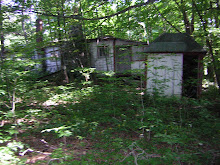
Take, for example, an unassuming little house on Monterey Road, near the intersection of Routes 23 & 57. Thousands drive by it every week, probably without much notice, as it is not particularly remarkable… save for being the scene of one of the more bizarre murder cases in the history of southern Berkshire County.

In 1915, the house was occupied by an 87 year old Civil War hero named Lafayette Battelle, who lived alone save for his champion race horse, Sheridan II (named for the general) and his 29 prize winning Rhode Island hens. Though in many ways a virtual hermit, Battelle was well regarded in state fair circles, widely recognized by his long mane of silky white hair and large gold horseshoe earrings, usually seen atop his impressive steed.

Battelle’s main friend and visitor seemed to have been a 12 year old boy named Fred Turner Jr., who would visit the hermit veteran almost daily to hear his vivid tales of Civil War.

So it was that when the boy came to visit the colorful hermit one Sunday morning in December, he was surprised to hear an unknown voice coming from within the house as he approached. Out of natural curiosity, the boy came closer until he could see Battelle inside, speaking with another man he didn’t recognize. Seeing that the two men were in conversation, and having been raised not to interrupt adults (this was 1915, remember), Turner turned and left.

The following day saw a blizzard hit the northeast, making the roads there impassable, and so the boy did not return until Wednesday, this time with his younger brother, William. As they came up close on the house, they sensed something amiss immediately. The curtains were drawn and the door was locked. More significantly, they could see no tracks around the house from the past two days. Checking the barn, they found all 29 hens frozen to death, and the horse hungry and without water.

Fearing the worst, the boys managed to find their way in the house, where they were confronted with a grisly scene: Battelle, tied to his bed with rope, sheet white, his head lying in a ring of dried blood. He had been dead for some time.


The boys ran home, where they called Great Barrington police. Chief William Oschman (a character in many interesting local stories) and medical examiner Joseph Beebe hurried to the scene to investigate. Battelle, they surmised, had been struck with a heavy object, then tied to the bed, where he eventually bled to death. The condition of the house indicated that the elderly veteran had struggled ferociously with his attacker in multiple rooms before succumbing.

Only one item appeared to be missing: an old key-winder gold watch, which Battelle had carried throughout the war for good luck. Meanwhile, another item was found that didn’t belong there… a pair of old felt boots with leather straps, which they determined did not belong to the murdered hermit.

In the ensuing investigation, young Fred Turner’s memory proved invaluable. His very detailed description immediately rang a bell with Chief Oschman, who suspected that it might match a farm hand by the name of Mike Ryan, who had used to work in Sandisfield.

Corroboration for this theory came quickly. After circulating the man’s description, Anna Sawtelle of New Marlboro contacted authorities to say that a man fitting it had stopped at her home for a meal a few nights before the murder. Taking pity on him after seeing the condition of his shoes, she gave him an old pair of felt boots with leather straps.

Another tip came in just on the heels of that one: another Sandisfield man told Oschman that “Mike Ryan” was in fact actually named Michael Glasheen, and that he frequently spent his time hanging around the Bank Street of Waterbury, Connecticut. Later, the gold watch turned up at a pawn shop thereabouts.

A warrant was issued and Glasheen was quickly apprehended by Waterbury police. He confessed quickly, claiming self defense. Glasheen alleged that he had struck Battelle only after the older man attacked him.

The jury found him guilty in a few hours, and he was sentenced to life at Charlestown State Prison. There, he made an intriguing further admission to the guards. He had, he now admitted, slain Lafayette Battelle in cold blood. After he struck him and tied him to the bed, Glasheen said, the imposing old man had looked at him, and groaned out a threat that he would “haunt him for the rest of his life.”

Over the following two years, Michael Glasheen became “violently mad,” as accounts have it, raving and howling incessantly. He was transferred to Bridgewater State Prison, where he died a few years later in 1926, still tortured by visions of the man with the long white hair and gold horshoe earrings.

One is left to wonder whether the ghost of Lafayette Battelle is literal phantasm, or Gestalt effect? The intricacies of the psychological consequences of committing murder are still murky and under-examined. In many ways, the shadows and spectral apparitions of a wounded mind turned upon itself seem more frightening than any visitation from the spirit of the departed.

Either way, one can hardly say the slaying of Lafayette Battelle went unavenged.

Tuesday, October 27, 2009

Savoy's murdered traveler: Another historical 'X-File'


Right on the side of Route 116 as it winds through the town of Savoy, there is a tiny cemetery rising up around a tomb built into the hillside. The plot itself is actually called Tomb Cemetery, and it holds a couple of dozen stones marking burials from the mid 1800s into the early 20th century.

The tomb itself is empty. It was built by a prominent early settler of the town, but he is not interred there. Unbeknownst even to many Savoy residents, the mystery surrounding this empty tomb is closely tied to the town's favorite legend.

It's a story that's been around since the 19th century, in print since at least the 1930s and still very much in circulation. In fact, I heard a version of it within a couple of minutes of asking about town history on a recent visit to the general store.

Recorded many times, the basic legend goes as follows: One dark and stormy night, a wealthy traveler arrived on horseback to put up at the old tavern. When morning came, he was nowhere to be seen, and his bed had not been slept in. His horse was found the next day in a nearby field with a terrible gash in its neck.

Townspeople suspected the innkeeper of foul play. Without a

body or any other proof, though, no charges were brought. Soon after, bloodstains began to appear on the stairs leading to the second floor, and they could not be removed. Strange lights were seen in the window of the room the stranger was said to be slain in, and sometimes even a gory apparition with hollow eyes was spotted.

The tale is most often attributed to the 1830s and set in the original Bowker Tavern, also known as the Bowker Hotel. Liberty Bowker began leasing a tavern along what is now Main Street in 1823, and it grew increasingly prosperous until he sold it to his son Calvin in 1841. The original structure burned down sometime after that, and it was rebuilt bigger and grander, with many rooms and famous trout dinners drawing crowds from North

Adams and Williamstown nightly. This second Bowker Hotel burned down in 1894. Savoy's current general store is built over the foundation, and charred stone can still be seen in the cellar, according to Gail Carlow, who runs the store with her husband.

In recent decades, some versions of the tale place it next door to the store, in what was once the Mason Hotel. The Mason Hotel ran on and off from 1833 until the 1920s; it is now a private residence.

A closer examination of Savoy history is illuminating. The first town history, written by H.E. Miller in 1879, makes a brief reference to the "ruins of the famous haunted house." Neither the Bowker nor Mason buildings would have been in ruins at the time his history was written, but an earlier establishment, called the Williams Tavern, fits the legend perfectly. In fact, the history surrounding this, Savoy's first inn facility, suggests that the long-running town legend may have a basis in very real events.

The story of the tavern begins with Joseph Williams, who arrived from Taunton with his three sons in 1780. One of those sons, William, built the inn on his father's property and opened for business around 1794. Four years later, he relinquished the business to his father.

Joseph Williams, along with his partner Jacob Blake, was involved in a wide variety of business dealings, including half the real estate sales in town. Not all of these transactions appear to have been legitimate; at least one unhappy associate had to set the authorities on Williams for money owed him.

Around 1815, Jacob Blake died, but Williams remained close with his widow, Olive. Three years later, Joseph inexplicably began selling off his many land holdings, all except the lot where he had built the tomb in question. This he reserved for himself and the widow Blake, according to a notation in the deed. Virtually everything else he sold, sometimes at an apparent loss, up until 1823, after which there is no more mention of him in records.

Olive Blake, meanwhile, was swept up in the Shaker missionary zeal that gripped the town during those years. She eventually relocated, along with her daughter Rhoda, to the Shaker community in Mount Lebanon, along with dozens of other Savoy residents. Her daughter Rhoda became a prominent Shaker sister, holding many important offices in the community and eventually penning an autobiography profiling her life and experiences. It is in this document that we find an account of Joseph Williams that may shed a great deal of light on the oft-told haunted tavern tale.

Rhoda refers to a man arriving on horseback to the tavern one evening. He checked in, but before going to his room demanded to see Williams and was taken to his nearby home. Soon, angry voices could be heard coming from the house. Then there was silence. In the morning, Rhoda says, it was found that the man's room had not been slept in, and no sign of him could be found save his horse, which remained in the stable for days unclaimed.

After this, many people noticed a decline in Williams' health, and he seemed always distracted, even depressed. It was during this period that he sold off nearly all of his land. Finally, according to Blake's account, he was standing by his fire one night, when he fell and was "consumed by the flames." He ran from his house to the nearby river, extinguishing himself, but died shortly after.

Curiously, no one seems to know where his body is buried. The tomb, if it was ever used, is currently empty, and inscriptions from Savoy's 21 small cemeteries show no sign of Joseph Williams. Olive Blake moved to Mount Lebanon and is no doubt interred in the Shaker burial ground there.

What really happened to the unnamed traveler that came to Savoy that fateful night? Where is Joseph Williams, and why does his elaborate tomb remain empty to this day? We may never know more about these questions than we do now. As for Williams Tavern, the property was bought in 1824 by Liberty Bowker, whose grave can be found there in Tomb Cemetery. Today, Route 116 passes right through where the building stood. Only the empty tomb remains to tantalize us with its enigmas.

That and the legend of the murdered traveler, which is as alive today as it ever was.

Joe Durwin is a longtime local mystery monger. Send tips on haunted places, unexplained occurrences, rumors and other accounts of the strange to mysterioushills@gmail.com

Related Anecdotes:

-The same sort of “lights” that legend describes being seen in the Williams Tavern after the suspected murder were also reported by Shakers in their documents, in particular at the nearby widow Olive Blake’s house. The tavern incident took place at the peak of Shaker revivalism in Savoy, and the lights were seen by them as a sign of faith and devotion.


-In 1878, Tomb Cemetery was desecrated by a very eloquent vandal. Thirty nine headstones were broken or tipped, and across the ground, a very large sheet of brown paper had been laid. On it was an original nine stanza poem entitled “The Red Dragon,” which predicted a second Civil War, to which the one just passed was “only a sample.” It was signed The Tramp. Text of the poem has not survived, but it was described as being written in excellent penmanship and grammar, written by someone "well educated in history." The mystery was never solved.

Tuesday, September 29, 2009

Hauntings at the Red Lion Inn?

By Joe Durwin

Photos by Autumn Doyle
Advocate Weekly
Thursday, September 24

Arguably the most prominent historic landmark in Stockbridge, the Red Lion Inn has been in existence since 1773 when Silas Pepoon first established a tavern there.

Over the course of more than two centuries, it has gone from being a smoky saloon for fomenting revolution to one of the most famous and well-regarded historic lodgings in the region. It has been through 20 proprietors and three name changes, and it even has burned to the ground and been rebuilt. It has accommodated presidents, dignitaries and many celebrities.

Turns out, it may accommodate even stranger denizens.

I first encountered rumors of a haunting at the inn a couple of years ago, through some reviews on the popular site tripadvisor.com that referred to unusual activity in room 301. The first, in August 2004, was from a man who said he felt something touching his head and tugging the bed sheet. Almost one year to the day later, a second reviewer reported several times waking up to the feeling of having their toes being pulled on, as well as the sound of footsteps and the sensation of an unseen force fluffing up the comforter.

A month later, a third review described the guest being woken all night by cover-pulling from the foot of the bed. When the man turned to look, he saw a man in a top hat and "olden day attire," who then vanished in a white mist.

This, it seems, is not the only part of the inn said to be haunted. Guests have told staff of unusual sightings in other rooms, and one former housekeeper stated there had been rumors among some of the cleaning staff going back at least a decade about the whole fourth floor being haunted. In addition to the man in the top hat, there are vague rumors about a ghostly young girl carrying flowers.

One intriguing story can be found in the current edition of the inn's "Stories," a courtesy booklet of anecdotes penned by former guests recalling their experiences staying there. In it, one Sheryl Ciccarelli recounts an incident taking place in Room 424. One night in April 2003, she awoke quite suddenly to an overwhelming feeling that someone - or something - stood over her bed. Looking at the clock as she woke her husband, she noted the time: 1:35 a.m. In the morning, they discovered that their daughter had left them a message to tell them that a rainstorm had knocked the power lines out to their house, causing a shower of sparks and a great commotion in the neighborhood. The time of her call? 1:35 a.m.

Other miscellaneous incidents have been mentioned in various other parts of the complex. The most significant involves a gentleman who asked to be relocated from his room, he said, because of the sheer number of "spirited" guests he encountered. The gentleman turned out to be celebrity medium James van Praagh.

Last year, Joseph Flammer and Diane Hill, a pair of ghost-hunters from Long Island, spent the night in room 301, bringing with them a variety of sophisticated equipment. In addition to a pervasive cold spot at the foot of the bed, they reported knocks coming from within the armoire adjacent to it. They also claim to have captured video recording an amorphous "something" sweeping across the room to bang into the camera tripod.

Intrigued, I wanted to see for myself what oddities room 301 might hold and made arrangements to rent the room. I arrived on a beautiful Sunday afternoon and quickly checked in. Room 301 is a bright, cozy little room at the southernmost end of the main building, with nothing overtly spooky about its appearance.

I immediately turned on a digital recorder and started snapping photos. I didn't expect anything terribly dramatic. Over the years I've visited more allegedly haunted places than I can count, and only a handful of times have things gotten very weird. It may be ghosts just don't like to deal with the press.

The only particularly curious thing observed during my stay involved certain electrical fluctuations. I'm not a professional "ghost-hunter" by any means, but I did happen to have an EMF detector on loan from a friend. In a nutshell, what this does is measure electromagnetic field fluctuations. Typically, these are emitted by electrical appliances, wiring and other such equipment. However, in one area of the floor between the foot of the bed and armoire, I got persistently high spikes, much higher than those closer to the TV and other electronics.

It would be difficult to completely rule out wiring or other mechanical emissions coming from under that area of the floor as a cause of these readings, but given the fact that most reports of odd phenomenon in 301 seem to involve that part of the room, it seems worth consideration.

So who or what might haunt the inn? My first thought was to look into the fire that leveled the building in 1896, but this is said to have resulted in no loss of lives. In 236 years of history, though, the inn has had many thousands of visitors and staff, and there's no real agreement on what era the alleged ghosts of the inn might hail from.

Could be there's just something in the name. In the process of scouring for data on the Stockbridge haunt, I was intrigued to find a profusion of haunted Red Lions. The 17th century Red Lion Inn of Avebury, Wiltshire, is widely held to be haunted by a former innkeeper, and the Red Lion in Gloucestershire has been said to feature the ghost of Anne Boleyn. Then there's London's Red Lion Square, where the shade of Oliver Cromwell is said to hang about, and the be-spooked Red Lion Hotel of Pontefract, Yorkshire. Back on this side of the pond, Chicago's Red Lion Pub is said to be frequented by half a dozen former patrons from various eras.

Is our Red Lion really haunted? According to Carol Cosco Baumann, director of marketing and communications, "Every now and then, we hear about a guest that has had an experience that they attribute to a ghostly presence. In the past four years, I can count the number of such instances on one hand. That said, we keep our minds open to the possibilities!"

Perhaps the best way to assuage your curiosity is to go see for yourself. I recommend room 301... just keep an eye on that strange spot at the foot of the bed.

Joe Durwin is a longtime local mystery monger. Send tips on haunted places, macabre sightings, curious artifacts, crackpot theories, pernicious rumors and other accounts of the strange to mysterioushills@gmail.com